

Mold Remediation Services in Fort Lauderdale in Commercial Buildings: Risks and Prevention Methods
Commercial buildings in Fort Lauderdale operate in one of the most challenging environments for moisture control. High humidity, heavy rain, coastal exposure, and nonstop HVAC use all create conditions where mold can develop quietly and spread quickly. Unlike residential homes, commercial properties often have shared systems, larger square footage, and hidden structural spaces that allow mold problems to grow before they are noticed.
Mold remediation in commercial buildings is not just about removing visible growth. It is a structured process focused on identifying moisture sources, containing contamination, restoring affected areas, and preventing recurrence. Understanding the risks and prevention methods helps property owners and managers protect their buildings and avoid costly disruptions.
Why Commercial Buildings in Fort Lauderdale Face Higher Mold Risk
Fort Lauderdale’s climate keeps indoor and outdoor humidity elevated most of the year. Moist air enters commercial buildings through entrances, ventilation systems, loading areas, and exterior walls.
Commercial HVAC systems run long hours and serve multiple zones. When condensation forms inside air handlers or ductwork, moisture can be distributed throughout the building.
Flat or low-slope roofs common in commercial construction are more vulnerable to water intrusion during storms. Even small roof failures can affect large ceiling areas.
Shared plumbing systems, restrooms, break rooms, and mechanical rooms increase the number of potential leak points.
Because of these factors, mold can spread widely before visible signs appear.
Common Mold Risk Areas in Commercial Properties
Ceiling cavities are one of the most frequent problem areas. Roof leaks or AC condensation can soak insulation above ceiling tiles while remaining hidden.
Wall cavities near plumbing chases, restrooms, and break rooms often trap moisture from slow leaks.
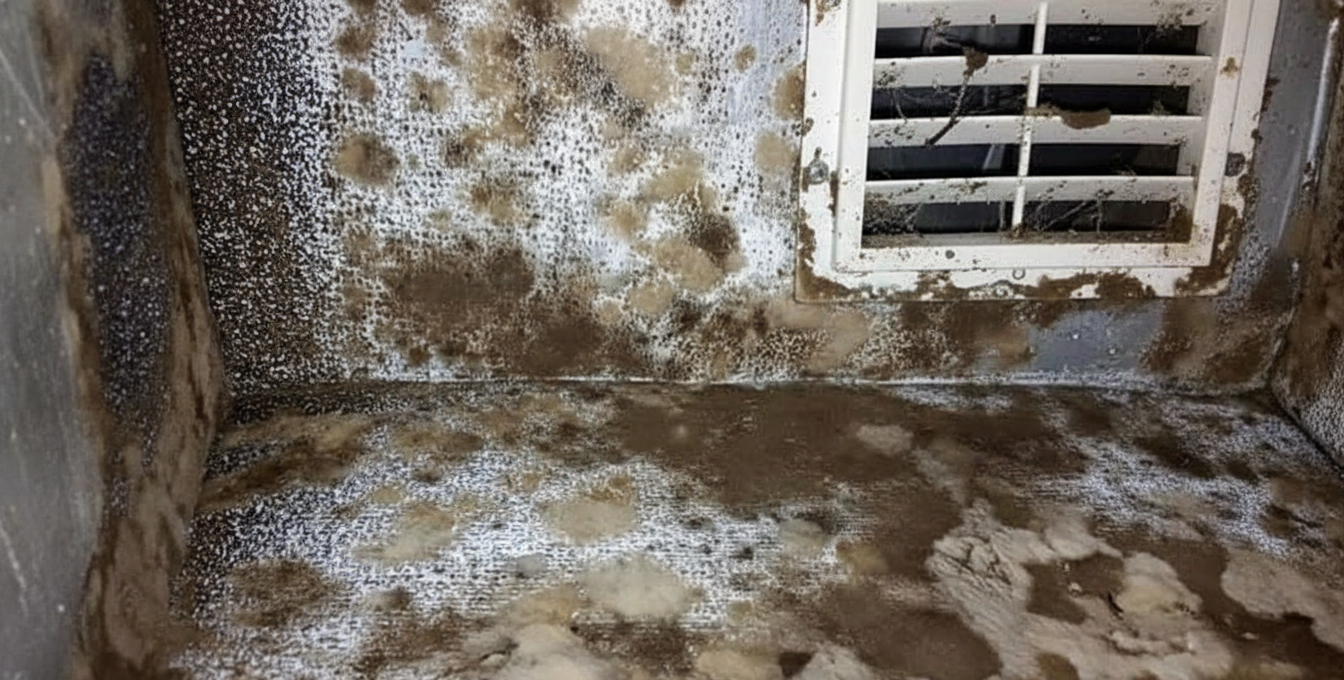
HVAC systems are a major risk. Condensation inside air handlers, return plenums, and ductwork can support mold growth and circulate spores throughout the building.
Flooring systems, including carpet tiles and subflooring, can retain moisture after leaks or flooding, especially on ground levels.
Storage rooms, server rooms, and low-traffic areas often have poor airflow, allowing humidity to build up unnoticed.
Risks of Mold in Commercial Buildings
Undetected mold continues to feed on moisture and building materials, leading to deterioration of drywall, insulation, ceiling systems, and flooring.
Odors can spread through HVAC systems, resulting in complaints from tenants, employees, or customers.
Mold-related damage often requires larger remediation projects when discovered late, increasing costs and downtime.
In commercial settings, remediation can disrupt operations, tenant occupancy, and revenue if not managed proactively.
Early Warning Signs Building Managers Should Watch For
Persistent musty or damp odors are often the first indicator of mold activity.
Discoloration or staining on ceiling tiles, walls, or around vents usually points to moisture intrusion.
Peeling paint, bubbling finishes, or warped materials suggest hidden moisture behind surfaces.
Condensation on vents or windows and unexplained increases in indoor humidity can also signal underlying problems.
Tenant or employee complaints about odors or comfort changes should always be investigated.
Why Mold Remediation Is More Complex in Commercial Buildings
Commercial mold problems are rarely isolated to one area. Moisture often affects multiple systems and zones at once.
Surface cleaning does not address mold inside wall cavities, ceilings, or HVAC components.
High indoor humidity and continuous system operation make drying more difficult.
Effective remediation requires coordination, containment, and careful planning to minimize disruption.
A structured remediation process is essential for long-term results.
Step One: Professional Inspection and Moisture Detection
Mold remediation begins with a detailed inspection of the building. This includes reviewing roof conditions, HVAC systems, plumbing layouts, and areas with a history of leaks.
Moisture detection tools are used to locate hidden water inside walls, ceilings, floors, and insulation.
Thermal imaging may help identify moisture patterns that are not visible to the eye.
In some cases, mold testing helps confirm the extent of contamination and guide remediation strategy.
Accurate inspection ensures remediation targets the real problem areas.
Step Two: Containment and Controlled Work Zones
Before remediation begins, containment is established to prevent mold spores from spreading to unaffected areas.
This may involve physical barriers and controlled airflow to isolate work zones.
Containment is especially important in commercial buildings where air circulation can spread contamination quickly.
Proper containment protects occupants and limits disruption.
Step Three: Removing and Treating Affected Materials
Materials that cannot be effectively cleaned, such as saturated insulation, ceiling tiles, or heavily contaminated drywall, may need to be removed.
Removal is performed carefully to limit spore release.
Salvageable surfaces are cleaned using professional-grade remediation methods.
Removing affected materials also exposes hidden moisture so drying can be completed properly.
Step Four: Drying and Moisture Control
Drying is a critical part of mold remediation. In Fort Lauderdale’s humid climate, moisture removal requires high-capacity dehumidification.
Air movers and dehumidifiers work together to remove moisture from both the air and building materials.
Moisture levels are monitored throughout the process to confirm drying is complete before repairs or reassembly.
Without thorough drying, mold is likely to return.
Pompano Mold Inspection and Testing provides mold remediation services in Fort Lauderdale commercial buildings with a focus on moisture-driven solutions and long-term prevention.
Step Five: Cleaning and Air Filtration
After removal and drying, remaining surfaces are cleaned to remove residual mold particles.
HEPA filtration is used to capture airborne spores during and after remediation.
This step helps restore indoor conditions and reduce lingering odors.
Cleaning is targeted to affected areas and nearby spaces where spores may have settled.
Preventing Mold in Fort Lauderdale Commercial Buildings
Prevention focuses on moisture management. Regular roof inspections help identify storm-related vulnerabilities early.
Routine HVAC maintenance keeps drain lines clear and condensation under control.
Prompt repair of plumbing leaks prevents moisture from spreading through shared systems.
Improving ventilation in restrooms, storage areas, and mechanical rooms reduces humidity buildup.
Periodic moisture inspections help catch hidden problems before mold develops.
Documenting inspections and repairs supports long-term building management.
The Role of HVAC Systems in Mold Prevention
HVAC systems play a central role in both moisture control and mold spread.
Condensation inside air handlers or ducts can undermine remediation efforts if not corrected.
Regular inspection of HVAC components helps identify moisture issues early.
Addressing HVAC-related moisture supports consistent indoor conditions across the building.
Why Local Experience Matters in Fort Lauderdale
Commercial buildings in Fort Lauderdale face location-specific challenges related to coastal humidity, storm exposure, and construction styles.
Local professionals understand how moisture typically enters and spreads in South Florida commercial properties.
This knowledge leads to more accurate inspections, more efficient remediation, and stronger prevention strategies.
A Practical Strategy for Commercial Property Owners
Mold remediation in commercial buildings is most effective when approached proactively. Identifying risks early, managing moisture, and maintaining building systems reduces the likelihood of large-scale remediation.
For Fort Lauderdale property owners and managers, understanding mold risks and prevention methods is key to protecting assets, minimizing disruption, and maintaining long-term building performance in a demanding coastal climate.