
Warning Signs and Prevention Tips: Moisture Detection in Lauderdale-by-the-Sea from Poor Ventilation
In Lauderdale-by-the-Sea, moisture problems don’t always start with storms, floods, or plumbing failures. In many homes, the real issue is poor ventilation. When humid air has no clear path to escape, it settles into walls, ceilings, attics, and HVAC systems. Over time, that trapped moisture becomes a serious problem—often long before homeowners realize anything is wrong.
Moisture detection plays a critical role in identifying these hidden issues early. In a coastal, high-humidity environment like Lauderdale-by-the-Sea, poor ventilation can quietly create conditions that lead to water damage, mold growth, and indoor air quality problems. This guide explains the warning signs homeowners should not ignore, how poor ventilation causes moisture buildup, and practical prevention tips that help keep homes dry and protected.
How Poor Ventilation Leads to Moisture Problems
Ventilation controls how air circulates through a home. When airflow is limited or poorly designed, humid air becomes trapped indoors. In South Florida, that air is already saturated with moisture.
With poor ventilation, moisture tends to:
- Condense on cooler surfaces
- Collect in wall and ceiling cavities
- Settle into attic insulation and framing
- Accumulate around HVAC systems and ductwork
Over time, this moisture becomes absorbed water. Even without visible leaks or standing water, materials begin to stay damp long enough to cause damage.
Why Lauderdale-by-the-Sea Homes Are Especially Vulnerable
Coastal homes in Lauderdale-by-the-Sea face unique challenges that make ventilation-related moisture problems more common.
Local risk factors include:
- High humidity most of the year
- Warm coastal temperatures that slow evaporation
- Salt air affecting building materials
- Homes sealed tightly for energy efficiency
- Attics and enclosed spaces with limited airflow
- Constant AC use creating condensation
When humid air enters a poorly ventilated home, it has no effective exit. Instead of drying out, moisture builds up gradually in hidden areas.
Common Areas Where Ventilation-Related Moisture Builds Up
Poor ventilation doesn’t affect every part of a home equally. Certain areas are far more prone to moisture buildup.
Attics
Inadequate attic ventilation allows hot, humid air to become trapped. Moisture condenses on roof decking, insulation, and framing, leading to damp materials and hidden water damage.
Bathrooms and Kitchens
Steam from showers and cooking adds large amounts of moisture to the air. Without working exhaust fans, that moisture spreads into walls and ceilings instead of exiting the home.
HVAC Systems and Ductwork
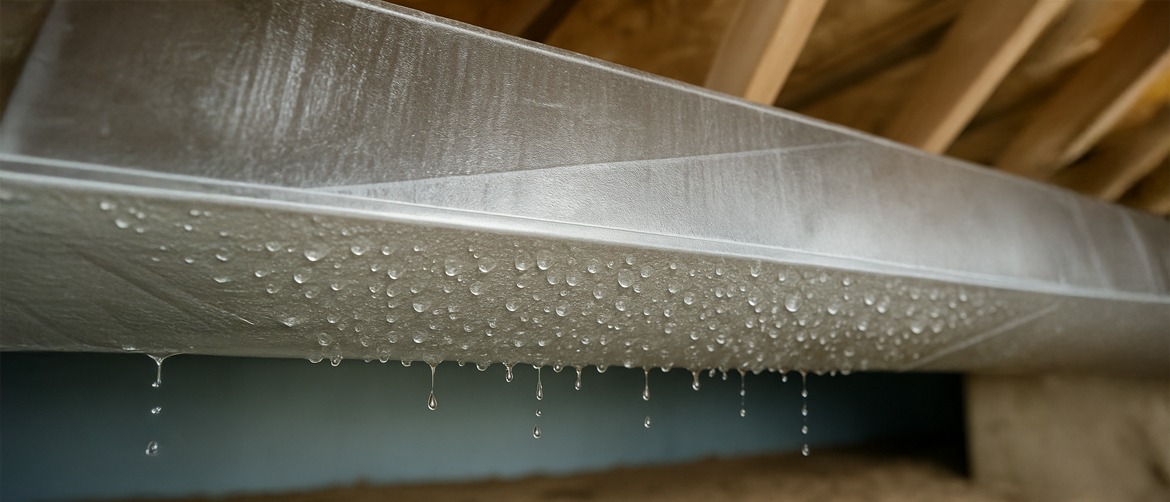
Ducts running through hot attic spaces often sweat due to temperature differences. Poor ventilation worsens condensation, allowing moisture to drip into insulation and ceilings.
Closets and Interior Rooms
Rooms without windows or airflow trap humidity easily. These areas frequently develop musty odors caused by slow moisture buildup.
Warning Signs Homeowners Should Not Ignore
Ventilation-related moisture problems usually appear gradually. Homeowners often overlook early symptoms, assuming they’re normal for coastal living.
Common warning signs include:
- Persistent musty or damp odors
- Condensation on windows or AC vents
- Peeling paint or bubbling drywall
- Stains on ceilings or walls without an obvious leak
- Rooms that feel humid even when the AC is running
- Increased AC runtime with little comfort improvement
These signs often mean moisture is already present inside materials and should be investigated.
Why Visual Checks Are Not Enough
One of the biggest mistakes homeowners make is relying on visual inspections alone. Moisture caused by poor ventilation often hides behind walls, above ceilings, or inside insulation.
Surfaces may feel dry while moisture remains trapped underneath. Without proper moisture detection tools, homeowners are left guessing. Moisture detection replaces assumptions with measurable data, confirming whether materials are actually dry or still holding moisture.
How Moisture Detection Works in Poor Ventilation Cases
Professional moisture detection focuses on identifying both visible and hidden moisture related to airflow problems.
Inspection and Assessment
The process begins with a thorough inspection of high-risk areas such as attics, ceilings, walls, bathrooms, and HVAC systems. Inspectors look for patterns consistent with ventilation-related moisture rather than leaks.
Moisture Detection Tools
Specialized tools measure moisture levels inside walls, ceilings, and floors. These tools help locate damp materials that look completely normal on the surface.
Identifying Moisture Patterns
Ventilation-related moisture often appears in specific patterns, such as widespread dampness rather than isolated wet spots. Recognizing these patterns helps pinpoint airflow issues.
Clear Findings and Recommendations
Results are explained clearly, outlining where moisture is present, why it’s occurring, and what steps help resolve it—whether that involves drying, ventilation improvements, or further inspection.
Why Poor Ventilation Moisture Becomes a Serious Problem
Moisture from poor ventilation does not resolve on its own in Lauderdale-by-the-Sea’s climate. High humidity slows evaporation and keeps materials damp for extended periods.
If left unaddressed, ventilation-related moisture can lead to:
- Mold growth in hidden areas
- Damage to drywall, wood, and insulation
- Persistent odors that return after cleaning
- Reduced indoor air quality
- Higher energy costs due to AC inefficiency
Early moisture detection helps prevent these problems before they escalate.
The Link Between Moisture Detection and Mold Prevention
Mold does not require flooding or major leaks. It only needs moisture that lingers long enough. Poor ventilation creates ideal conditions for mold growth long before visible signs appear.
Moisture detection helps prevent mold by:
- Identifying damp areas early
- Allowing targeted drying before mold develops
- Supporting mold inspection and testing decisions
- Reducing long-term indoor air quality issues
In many Lauderdale-by-the-Sea homes, moisture detection is the step that prevents ventilation problems from turning into full mold remediation.
HVAC Systems and Ventilation-Related Moisture
Air conditioning systems are designed to remove moisture, but poor ventilation can overwhelm them.
Common HVAC-related moisture issues include:
- Condensation on ductwork
- Clogged condensate drain lines
- Overflowing drain pans
- Poor airflow balance
- Negative pressure pulling humid air indoors
Moisture detection often includes inspecting HVAC components to ensure they aren’t contributing to hidden moisture buildup.
Prevention Tips for Homeowners
Preventing moisture problems from poor ventilation requires proactive steps and regular attention.
Helpful prevention tips include:
- Using bathroom and kitchen exhaust fans consistently
- Ensuring attic ventilation meets current standards
- Scheduling regular AC maintenance
- Keeping condensate drain lines clear
- Monitoring indoor humidity levels
- Addressing condensation promptly
- Inspecting enclosed spaces periodically
These steps reduce the chance that moisture will build up unnoticed.
Why DIY Solutions Often Fall Short
Opening windows or running fans may feel helpful, but in a humid coastal environment, these steps often introduce more moisture into the home.
DIY approaches fail because:
- Outdoor air is often more humid than indoor air
- Fans move moisture but don’t remove it
- Hidden materials remain wet
- There’s no way to verify dryness
Professional moisture detection relies on measurement, not guesswork.
Why Local Experience Matters in Lauderdale-by-the-Sea
Ventilation-related moisture problems in Lauderdale-by-the-Sea are shaped by coastal humidity, home design, and weather patterns. Professionals familiar with the area understand where moisture tends to accumulate and how poor ventilation shows up in South Florida homes.
Teams serving Lauderdale-by-the-Sea, Pompano Beach, Lighthouse Point, Deerfield Beach, Margate, Coconut Creek, North Lauderdale, and Fort Lauderdale recognize these patterns quickly. Pompano Mold Inspection and Testing applies this local knowledge to moisture detection services, focusing on accurate identification and long-term prevention.
A Smart, Preventive Next Step
If your Lauderdale-by-the-Sea home feels humid, smells musty, or shows signs of moisture without any obvious leaks, poor ventilation may be the cause. Moisture detection in these situations is not an overreaction—it’s a preventive step that protects your home.
A professional moisture detection assessment can identify hidden dampness, explain why it’s happening, and help you take targeted steps to prevent future damage. In a coastal environment where humidity is constant, early detection is one of the most effective tools homeowners have to stay ahead of moisture-related problems.