
How Moisture Detection Helps Homes in Lighthouse Point After Roof Leaks
Roof leaks rarely behave the way homeowners expect. The stain you see on the ceiling is usually not where the water entered—and almost never the only place it went. In Lighthouse Point, coastal humidity and frequent storms make roof leaks especially deceptive, allowing moisture to linger long after the rain stops.
That’s where moisture detection becomes critical. It turns a roof leak from a guessing game into a controlled, measurable problem—so repairs actually last.
Why Roof Leaks Are More Complicated in Lighthouse Point
Lighthouse Point homes deal with conditions that make post-leak damage worse than it looks:
- High year-round humidity slows drying
- Warm temperatures keep materials damp longer
- Wind-driven rain forces water sideways, not straight down
- Attics trap heat and moisture
- Salt air accelerates wear on roofing materials
By the time a ceiling stain appears, moisture has often traveled through insulation, framing, and wall cavities. Drying the surface alone doesn’t solve that.
What Moisture Detection Really Does After a Roof Leak
Moisture detection isn’t just “checking if something is wet.” It’s a process that identifies where moisture is hiding, how far it spread, and whether it’s still active.
After roof leaks, moisture detection typically involves:
- Moisture meter readings in ceilings, walls, and upper floors
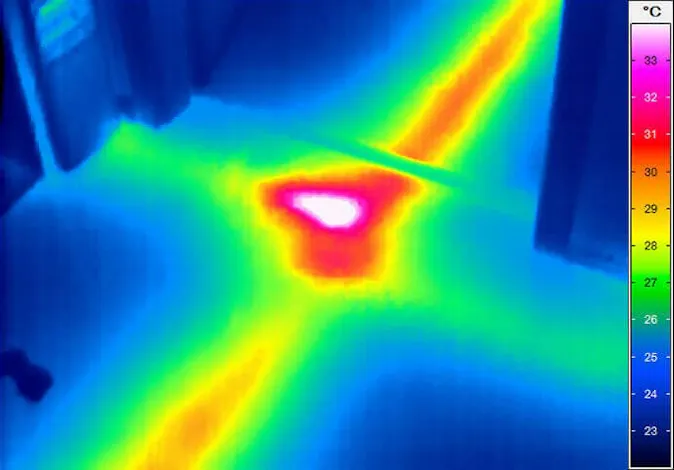
- Thermal imaging to trace moisture pathways
- Attic inspections of insulation and roof decking
- Comparing affected areas to known dry zones
This creates a clear picture of the damage—without tearing the house apart.
Roof Leaks Rarely Stay in One Spot
One of the biggest homeowner mistakes is assuming the visible stain marks the full extent of the leak.
In reality, water often:
- Runs along roof trusses before dropping
- Spreads across attic insulation
- Travels down wall cavities
- Pools above drywall before soaking through
- Appears far from the original roof breach
Moisture detection maps this hidden movement so nothing important gets missed.
Preventing Mold Growth After Roof Leaks
In Lighthouse Point, mold risk rises quickly after any roof leak. Mold doesn’t need flooding—it needs moisture and time.
Moisture detection helps prevent mold by:
- Identifying damp materials early
- Showing where drying is actually needed
- Preventing moisture from being sealed behind repairs
- Limiting how long materials stay wet
In many cases, early detection prevents the need for mold remediation entirely.
Why Visual Inspections Are Not Enough
Ceilings and walls can look dry while still holding moisture inside. In fact, surface drying often hides deeper problems.
Visual-only checks fail because:
- Drywall dries from the outside in
- Insulation stays wet long after surfaces look normal
- Paint hides moisture behind it
- Odors may not appear until mold starts
Moisture detection provides measurable data—not assumptions.
Supporting Proper Drying (Not Guesswork)
Drying after roof leaks only works when it’s targeted. Moisture detection tells you exactly where drying equipment should be placed.
It helps by:
- Defining the true wet area
- Avoiding unnecessary demolition
- Preventing missed wet zones
- Confirming when drying is complete
Without detection, drying is often incomplete—and problems return later.
Avoiding Repeat Stains and Failed Repairs
If you’ve ever repainted a ceiling only to see the stain come back, moisture detection explains why.
Repeat damage usually happens because:
- Moisture was never fully removed
- Repairs were done too soon
- Wet insulation or framing was left in place
Moisture detection verifies dryness before repairs begin, preventing callbacks and frustration.
Distinguishing Roof Leaks From Other Moisture Issues
Not all ceiling moisture is caused by roof leaks—especially in coastal homes.
Moisture detection helps differentiate between:
- Roof intrusion
- AC condensation or duct sweating
- Condensate drain overflows
- Plumbing leaks in upper walls
This matters because fixing the roof won’t solve an AC or plumbing issue—and vice versa.
Protecting Structural Materials
Water weakens building materials over time. When moisture stays hidden, damage spreads quietly.
Moisture detection helps protect:
- Roof decking and framing
- Ceiling drywall
- Wall studs
- Insulation
- Upper-floor subfloors
Finding moisture early limits structural repairs instead of escalating them.
Helping With Insurance Documentation
When roof leaks lead to insurance claims, documentation matters.
Moisture detection provides:
- Measured proof of water damage
- Clear scope of affected areas
- Evidence that drying was necessary
- Support for proper repair timelines
Objective data reduces disputes and delays.
Common Areas Checked After Roof Leaks
After roof leaks in Lighthouse Point homes, moisture detection commonly focuses on:
- Ceilings below rooflines
- Attic insulation and decking
- Upper wall cavities
- Areas around vents and light fixtures
- Adjacent rooms where water may have migrated
These are the places moisture hides the longest.
The Cost of Skipping Moisture Detection
Skipping moisture detection often feels like saving money—until it isn’t.
Without detection, homeowners risk:
- Mold growth behind ceilings
- Structural wood damage
- Persistent odors
- Repeat repairs
- Larger restoration costs later
Early detection is almost always cheaper than delayed correction.
When Moisture Detection Should Be Scheduled
Moisture detection is especially important when:
- Roof leaks lasted more than a short rain event
- Storms were heavy or wind-driven
- Water stains are spreading
- Repairs are planned quickly after the leak
- Musty odors appear
In coastal climates, even “minor” leaks justify investigation.
Long-Term Benefits for Lighthouse Point Homes
Moisture detection doesn’t just solve today’s problem—it protects the home long-term.
Benefits include:
- Fewer repeat repairs
- Reduced mold risk
- Stronger, longer-lasting repairs
- Better indoor air quality
- Protection of property value
In a coastal environment, prevention is always the smarter investment.
Final Thoughts
In Lighthouse Point, roof leaks are rarely simple. Moisture travels, hides, and lingers—especially in warm, humid conditions. Moisture detection helps homeowners see the full picture, not just the visible damage.
By identifying hidden moisture, guiding proper drying, and verifying when it’s safe to repair, moisture detection turns roof leaks from recurring headaches into problems that are actually solved. After a roof leak, it’s one of the most important steps a homeowner can take to protect their home from long-term damage.