Mold Remediation in Pompano Beach: Early Signs You Should Not Ignore
Mold problems rarely start with dramatic damage. In most Pompano Beach homes, mold begins quietly—behind walls, inside air ducts, under flooring, or in attics where moisture lingers. By the time visible staining or odor appears, growth may already be well established.
Understanding the early warning signs of mold and knowing how proper remediation works can help homeowners, landlords, and property managers avoid larger structural issues and costly repairs. In South Florida’s humid climate, awareness and timely action make a significant difference.
What Mold Remediation Really Means
Mold remediation is the process of identifying mold growth, containing affected areas, removing contaminated materials when necessary, and correcting the moisture source that allowed mold to develop in the first place.
It’s important to understand that remediation is not just cleaning visible mold. True remediation involves:
- Locating hidden growth
- Addressing moisture or humidity issues
- Preventing cross-contamination
- Restoring affected areas safely
Without correcting the moisture problem, mold often returns.
Why Mold Problems Are So Common in Pompano Beach
Homes throughout Pompano Beach, Lighthouse Point, and Deerfield Beach face conditions that naturally encourage mold growth.
High Humidity Levels
Humidity remains high most of the year. Even without leaks, moisture in the air can accumulate in building materials.
Seasonal Storms and Heavy Rain
Storms can lead to roof leaks, window intrusion, or minor flooding that introduces moisture into walls and flooring.
Air Conditioning Condensation
Air conditioners remove humidity, but they also produce condensation. If drain lines clog or insulation is damaged, moisture may build up unnoticed.
Poor Ventilation
Bathrooms, kitchens, laundry rooms, and attics often retain moisture if airflow is limited.
These factors mean mold prevention and early detection are especially important in Broward County homes.
Early Signs Homeowners Should Not Ignore
Mold problems often give subtle warnings before becoming visible.
Some of the most common early signs include:
- A musty or damp odor indoors
- Increased humidity or condensation on windows
- Small discolorations on walls or ceilings
- Peeling paint or bubbling drywall
- Allergy-like irritation when indoors
- Warped baseboards or flooring
Many homeowners in Coconut Creek and Margate report noticing odor before any visible growth appears. That smell is often the first clue moisture is present somewhere in the home.
Hidden or Overlooked Sources of Mold
Mold frequently develops in areas homeowners rarely inspect.
Common hidden sources include:
Behind Drywall
Slow plumbing leaks or condensation inside walls can support mold growth without visible signs for months.
Under Flooring
Water intrusion from appliances, roof leaks, or flooding can become trapped beneath flooring materials.
Attics and Crawl Spaces
Warm air rising into attics combined with roof heat creates condensation conditions that encourage mold.
Air Ducts and HVAC Systems
Moisture inside ductwork or near evaporator coils can lead to hidden contamination.
These areas often require professional inspection to identify properly.
Why DIY Mold Removal Usually Fails
Small surface mold on non-porous materials can sometimes be cleaned safely, but most mold issues extend deeper than they appear.
DIY methods often fail because:
- Only visible mold is removed
- Moisture sources remain untreated
- Spores spread during cleaning
- Porous materials like drywall remain contaminated
Homeowners in Fort Lauderdale and Lauderdale-by-the-Sea sometimes attempt surface cleaning, only to see mold return weeks later because the underlying moisture issue was never corrected.
Professional Mold Inspection and Testing Explained
Professional mold inspections focus on finding the source of moisture and determining the extent of contamination.
A thorough inspection may include:
- Visual examination of high-risk areas
- Moisture detection in walls and flooring
- Airflow and ventilation evaluation
- Testing when necessary to confirm conditions
Experienced local companies such as Pompano Mold Inspection and Testing understand how humidity, storms, and construction styles in South Florida influence mold growth patterns. This regional experience helps identify problems more accurately.
Proper Mold Remediation Process
A professional remediation process typically follows several steps.
1. Containment
Affected areas are isolated to prevent spores from spreading to clean sections of the home.
2. Removal of Contaminated Materials
Porous materials that cannot be safely cleaned may be removed and replaced.
3. Cleaning and Treatment
Surfaces are cleaned using methods appropriate for the material and severity of contamination.
4. Moisture Correction
Leaks, condensation problems, or ventilation issues are repaired to prevent recurrence.
5. Drying and Restoration
Affected areas are dried thoroughly and restored to normal conditions.
Each step is designed to solve the root problem, not just the visible symptoms.
Flood Restoration and Water Damage Repair
Flooding and water intrusion significantly increase the risk of mold growth. Even small amounts of water trapped in materials can lead to contamination within days.
Flood restoration often includes:
- Water extraction
- Structural drying
- Inspection for hidden moisture
- Repair of damaged materials
Homes in North Lauderdale and Deerfield Beach that experience storm flooding frequently require both water damage repair and mold remediation to fully restore indoor conditions.
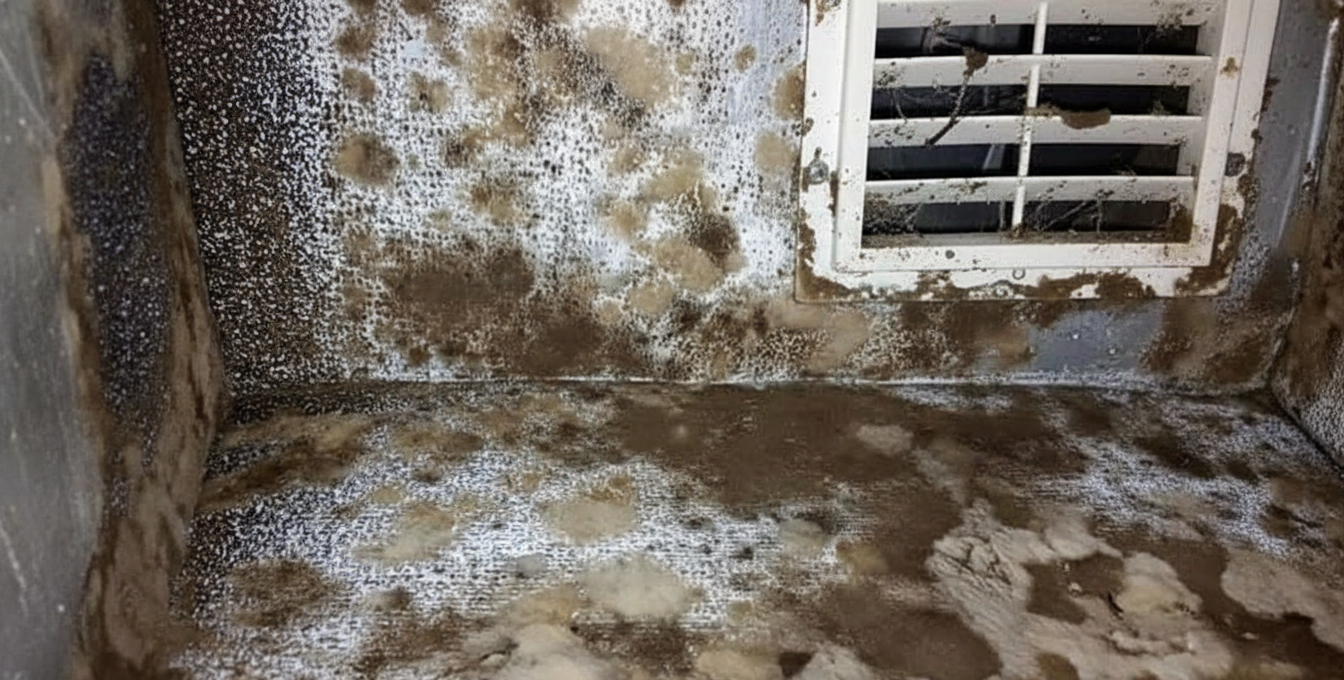
Air Ducts, AC Systems, and Mold
HVAC systems play a major role in indoor humidity levels. When ducts, coils, or drain lines develop problems, moisture can accumulate inside the system.
Warning signs related to HVAC systems include:
- Musty odors when the AC runs
- Excess indoor humidity
- Reduced airflow
- Visible dust or residue near vents
Routine maintenance and duct inspections help prevent these problems from developing into larger issues.
How to Prevent Mold in Pompano Beach Homes
Prevention is often the most effective strategy.
Homeowners can reduce risk by:
- Fixing leaks promptly
- Keeping humidity levels under control
- Maintaining air conditioning systems
- Ensuring proper attic ventilation
- Inspecting roofs after storms
- Cleaning and maintaining gutters
Property managers in Margate and Coconut Creek often include seasonal inspections as part of routine maintenance to catch small issues early.
Why Local Experience Matters
Mold behavior varies by climate and construction style. Homes in Pompano Beach face different conditions than homes in dry regions.
Local professionals understand:
- How coastal humidity affects structures
- Typical roof and attic ventilation patterns
- Seasonal storm impacts
- Common moisture intrusion points
This knowledge allows for faster identification of problems and more practical long-term solutions.
A Calm, Practical Next Step
Mold remediation is most effective when problems are addressed early. Ignoring musty odors, moisture stains, or humidity issues often allows damage to spread quietly over time.
Homeowners in Pompano Beach, Lighthouse Point, and surrounding communities often choose periodic inspections from experienced providers like Pompano Mold Inspection and Testing to stay ahead of moisture problems and maintain a safe, comfortable living environment.
Paying attention to early warning signs—and acting before damage becomes severe—helps protect both the structure of the home and the quality of the indoor environment.