Understanding the Process: Carpet Cleaning After Water Damage in Pompano Beach After Roof Leaks
Roof leaks are a common issue for homeowners in Pompano Beach, especially during storm season and periods of heavy rain. While ceiling stains and dripping water are obvious warning signs, one of the most overlooked consequences of a roof leak is water damage to carpets. Carpets absorb moisture quickly, and in Florida’s humid climate, they can remain damp long after the leak is repaired.
Understanding how carpet cleaning after water damage works—and why proper inspection and drying matter—can help homeowners prevent mold growth, odors, and long-term structural damage.
What Happens When Roof Leaks Soak Carpets
When water enters a home through a roof leak, it often travels through insulation, drywall, and framing before reaching the floor. By the time moisture reaches carpeting, it may already have spread across a wide area.
Water can affect:
- Carpet fibers
- Carpet padding
- Subfloors
- Baseboards and drywall edges
Even if the carpet surface appears dry, padding and subfloor materials often remain damp, which can lead to mold growth within a short period.
Why Roof Leak Damage Is Common in Pompano Beach
Homes in Pompano Beach and nearby communities such as Lighthouse Point, Deerfield Beach, Margate, Coconut Creek, and Fort Lauderdale are especially vulnerable to roof-related water damage.
Several factors contribute:
- Heavy seasonal storms
- Wind-driven rain
- Aging roofing materials in some homes
- High humidity that slows drying
- Flat or low-slope roof sections prone to pooling
Because humidity remains high throughout much of the year, carpets and building materials take longer to dry, increasing the risk of long-term damage.
Early Signs of Carpet Water Damage After Roof Leaks
Some signs of carpet damage appear immediately, while others develop gradually over several days.
Homeowners should watch for:
- Damp or musty odors
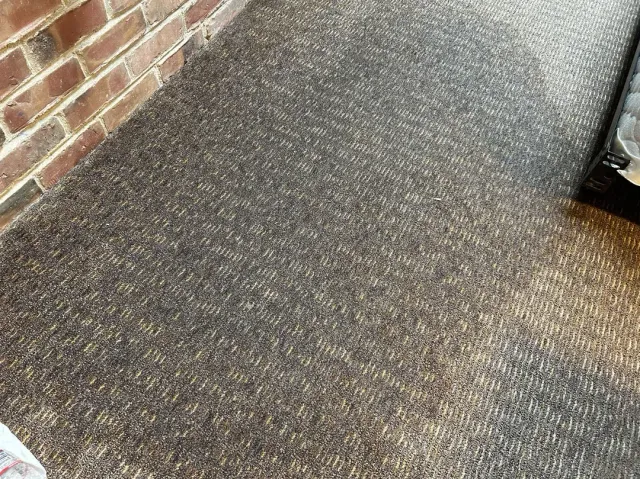
- Dark or discolored patches on carpet
- Carpet that feels cool or damp to the touch
- Wrinkling or buckling of carpet
- Increased humidity indoors
These signs often indicate moisture trapped beneath the carpet rather than on the surface.
Hidden Damage That Often Goes Unnoticed
One of the biggest challenges after roof leaks is hidden moisture. Water rarely stays confined to one spot and often spreads into areas that are difficult to see.
Common hidden problem areas include:
- Carpet padding beneath the surface
- Subfloor materials
- Inside baseboards
- Behind drywall near the floor
- Inside closets near affected rooms
Without proper inspection, these areas can remain damp for weeks.
Why DIY Carpet Drying Often Fails
Many homeowners try to dry carpets using fans, towels, or household vacuums. While these methods may remove surface moisture, they rarely dry deeper layers effectively.
DIY drying often falls short because:
- Household fans do not provide enough airflow
- Padding remains saturated
- Humidity stays elevated indoors
- Hidden moisture goes undetected
Incomplete drying is one of the main reasons mold develops after water damage.
The Importance of Professional Inspection
A proper inspection is the first step in restoring carpets after water damage. Without identifying the full extent of moisture, cleaning alone may not solve the problem.
A professional inspection typically includes:
- Moisture meter readings in carpet and subfloor
- Inspection of drywall and baseboards
- Humidity measurements
- Evaluation of the source of water intrusion
Professionals familiar with Pompano Beach homes understand how water travels through attic spaces, ceilings, and flooring after roof leaks.
Companies such as Pompano Mold Inspection and Testing often perform these inspections to ensure hidden moisture is identified before restoration begins.
The Carpet Cleaning and Restoration Process
Once inspection is complete, restoration follows a structured process to remove moisture and restore the carpet safely.
Step 1: Water Extraction
High-powered extraction equipment removes water from carpet fibers and padding. This step significantly reduces drying time.
Step 2: Padding Assessment
If carpet padding is heavily saturated, it may need to be removed and replaced. Padding holds moisture longer than carpet fibers and can contribute to odors and mold growth.
Step 3: Drying and Dehumidification
Industrial air movers and dehumidifiers are placed strategically to dry:
- Carpet fibers
- Subfloor materials
- Baseboards
- Surrounding air
Moisture levels are monitored to ensure complete drying.
Step 4: Cleaning and Sanitizing
After drying, carpets are cleaned to remove contaminants and odors that may remain after water exposure.
Step 5: Final Moisture Verification
Moisture readings confirm that all materials are dry enough to prevent mold growth.
Risks of Delaying Carpet Restoration
Waiting too long to address water-damaged carpets can lead to several problems.
Common risks include:
- Mold growth beneath carpets
- Persistent odors
- Subfloor damage
- Reduced indoor air quality
- Increased repair costs
Prompt action significantly reduces these risks.
Mold Growth and Carpet Moisture
Carpet padding and subfloors create ideal conditions for mold when moisture is present. Mold often develops beneath carpets where airflow is limited and humidity remains high.
In Pompano Beach homes, mold commonly forms in:
- Rooms beneath roof leak areas
- Closets and hallways
- Edges of rooms near exterior walls
- Areas around AC vents
Proper drying is essential to preventing mold from forming in these locations.
The Role of Air Conditioning and Humidity
Air-conditioning systems help control indoor humidity, but roof leaks can overwhelm the system’s ability to remove moisture.
Common issues include:
- High indoor humidity after leaks
- Damp duct insulation
- Condensation forming on vents
- Reduced cooling efficiency
Ensuring the HVAC system is functioning properly helps speed drying and maintain healthy indoor air conditions.
Repairing Areas Affected by Roof Leaks
After carpets are cleaned and dried, repairs may be needed to restore the affected area.
These repairs may include:
- Replacing carpet padding
- Repairing baseboards
- Sealing minor drywall damage
- Reinstalling carpet sections
Addressing these repairs helps restore the home and prevents future moisture intrusion.
Prevention Tips After Roof Leaks
While roof leaks cannot always be prevented, homeowners can reduce damage risks with routine maintenance.
Helpful steps include:
- Inspecting roofs after storms
- Checking attic insulation for damp areas
- Cleaning gutters regularly
- Repairing small leaks immediately
- Monitoring indoor humidity levels
Using a humidity monitor indoors helps identify moisture problems early.
Why Local Experience Matters
Water damage restoration in South Florida requires techniques suited to humid conditions. Drying times, airflow placement, and moisture monitoring must account for local climate patterns.
Professionals working in Pompano Beach, Lighthouse Point, Deerfield Beach, and Margate understand:
- How roof leaks typically affect local homes
- Common moisture pathways in slab and block construction
- Effective drying strategies in humid environments
This local experience helps ensure restoration is thorough and lasting.
Taking Action Early Protects Your Home
Water-damaged carpets rarely improve on their own. The sooner moisture is removed and carpets are properly cleaned and dried, the lower the risk of mold growth and structural damage.
If damp odors, stains, or signs of moisture appear after a roof leak, scheduling an inspection can help identify hidden moisture and prevent larger problems. Pompano Mold Inspection and Testing is familiar with the types of carpet and moisture issues commonly seen in Pompano Beach homes, and early evaluation often prevents costly repairs later.
Addressing water damage quickly and restoring carpets properly helps maintain a dry, healthy, and comfortable home environment.