Mold Inspection Solutions for Homes in Margate: Warning Signs and Prevention Tips
Mold problems are a common concern for property owners in Margate and throughout Broward County. The combination of warm temperatures, high humidity, and frequent rain creates conditions where moisture can linger in walls, ceilings, and air-conditioning systems. When moisture is present, mold can develop quickly, often without being noticed until the problem has spread.
Mold inspection is one of the most effective ways to identify issues early, prevent structural damage, and maintain a safe indoor environment. Understanding the warning signs and learning how prevention works can help homeowners protect their property for the long term.
What Mold Inspection Is
Mold inspection is a professional evaluation of a property to identify visible and hidden mold growth, moisture intrusion, and conditions that allow mold to develop. Inspections are designed to locate problems early and determine whether testing or remediation may be necessary.
A thorough inspection typically includes:
- Visual examination of walls, ceilings, and flooring
- Moisture detection in building materials
- Inspection of attics, crawl spaces, and duct systems
- Evaluation of ventilation and humidity levels
In many cases, inspections uncover moisture problems before mold becomes widespread, allowing homeowners to address the cause quickly.
Why This Happens So Often in Pompano Beach and Nearby Areas
Homes in Margate experience many of the same environmental conditions found in Pompano Beach, Lighthouse Point, Deerfield Beach, Coconut Creek, North Lauderdale, Lauderdale-by-the-Sea, and Fort Lauderdale. High humidity, heavy rains, and year-round air-conditioning create constant moisture challenges.
Several factors make mold growth more likely in this region:
- Storm water intrusion during rainy seasons
- Roof leaks after strong winds
- AC condensation and clogged drain lines
- Poor ventilation in attics and closets
- Older duct systems retaining moisture
Even newer homes can develop mold if humidity is not properly controlled or if minor leaks go unnoticed.
Common Signs Homeowners Notice
Mold problems often begin quietly, but there are warning signs that property owners in Margate frequently observe.
Some of the most common signs include:
- Persistent musty odors
- Discoloration or staining on walls or ceilings
- Peeling paint or bubbling drywall
- Increased humidity indoors
- Dark spots appearing near vents or baseboards
These signs do not always confirm mold, but they indicate that moisture may be present and should be investigated.
Hidden or Overlooked Sources of Mold
Many mold problems originate in areas that are rarely inspected. Hidden moisture can accumulate slowly, allowing mold to grow behind surfaces.
Frequently overlooked sources include:
- Air-conditioning air handlers and ducts
- Pipe leaks behind walls
- Window frame leaks
- Shower pan failures
- Attic insulation exposed to humidity
Moisture detection tools are often necessary to locate these issues accurately, especially when the damage is not visible.
Why DIY Mold Removal Usually Fails
Some homeowners attempt to clean mold using household cleaners or store-bought products. While surface cleaning may remove visible spots temporarily, it rarely addresses the root cause.
DIY mold removal often fails because:
- Hidden mold remains untreated
- Moisture sources are not corrected
- Contaminated materials are not properly removed
- Mold returns when humidity remains high
Without identifying and correcting the moisture source, mold problems typically reappear.
Professional Mold Inspection and Testing Explained
Professional inspections follow a structured process designed to provide accurate information about the condition of a home.
This process may include:
Visual Inspection
Inspectors evaluate the property for signs of water damage, staining, or visible mold growth.
Moisture Mapping
Specialized meters help locate damp areas behind walls or beneath flooring.
Air and Surface Sampling
If needed, samples may be collected to determine mold spore levels and types present.
Laboratory Analysis
Samples are analyzed to provide clear and reliable results.
Professionals such as Pompano Mold Inspection and Testing often use these methods to help homeowners in Margate and surrounding areas understand the extent of a mold issue and the most effective way to address it.
Proper Mold Removal and Remediation Process
If mold is confirmed, remediation focuses on removing contamination safely and correcting the conditions that caused it.
A proper remediation process typically includes:
- Containment of affected areas
- Removal of contaminated materials when necessary
- Cleaning and treatment of structural surfaces
- Drying and dehumidification
- Repair of leaks or ventilation issues
Thorough drying is essential. Even small amounts of remaining moisture can allow mold to return.
Flood Restoration and Water Damage Repair
Flooding and water damage are major contributors to mold growth in Margate homes. Heavy rain and plumbing failures can saturate materials quickly, especially drywall and carpeting.
Flood restoration generally involves:
- Water extraction
- Structural drying
- Dehumidification
- Cleaning and sanitation
- Repair or replacement of damaged materials
Prompt restoration significantly reduces the risk of mold development.
Air Ducts, AC Systems, and Mold
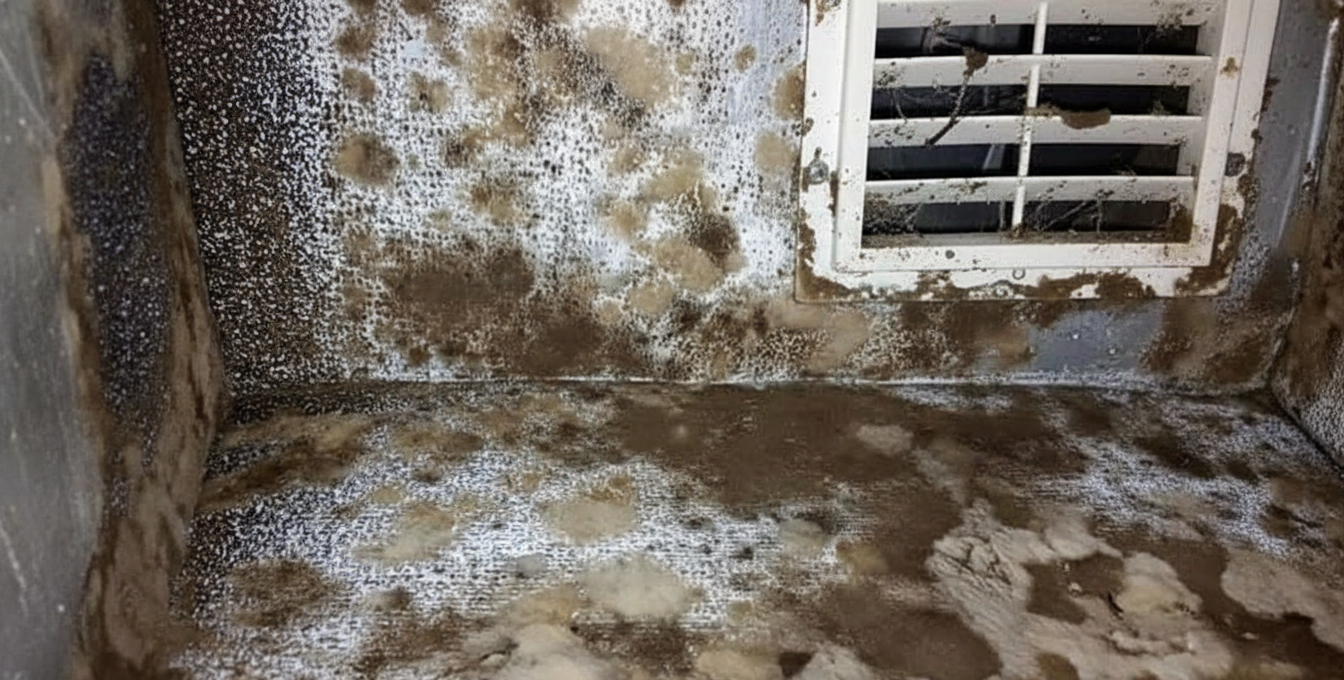
Air-conditioning systems are a common source of hidden moisture in South Florida homes. Condensation forms naturally inside cooling systems, and when drain lines clog or airflow is restricted, moisture can accumulate in ducts or air handlers.
This can lead to:
- Musty odors from vents
- Reduced airflow
- Dust and debris buildup
- Mold growth inside ductwork
Regular HVAC maintenance and periodic duct inspections help prevent these problems and improve indoor air quality.
How to Prevent Mold in Pompano Beach Homes
Preventing mold requires consistent attention to moisture control and home maintenance.
Effective prevention strategies include:
- Keeping indoor humidity below 60%
- Cleaning AC drain lines regularly
- Repairing leaks promptly
- Ensuring proper attic ventilation
- Scheduling periodic inspections
- Using dehumidifiers in humid seasons
These steps greatly reduce the likelihood of mold growth and structural damage.
Why Local Experience Matters
Mold behaves differently depending on climate and construction methods. Professionals familiar with Margate and nearby Broward County communities understand how humidity, coastal weather, and building materials affect moisture movement.
Local experience allows inspectors to identify common problem areas quickly and recommend solutions suited to South Florida homes.
Protecting Your Property Through Early Detection
Mold inspection is not only about finding mold—it is about preventing future damage. Identifying moisture problems early, correcting ventilation issues, and maintaining HVAC systems can significantly reduce the risk of recurring mold.
Property owners who stay proactive with inspections and maintenance often avoid larger repairs and preserve the long-term condition of their homes. Taking action early helps maintain indoor comfort, protect building materials, and ensure a healthier living environment for years to come.