
AC Moisture Repair Solutions for Homes in Pompano Beach: Early Signs You Should Not Ignore
In Pompano Beach, air conditioning systems are essential for maintaining comfort and controlling indoor humidity. However, they can also be a major source of hidden moisture problems that, if left unaddressed, may lead to mold growth, structural damage, and indoor air quality issues. AC moisture problems often develop silently, behind walls, above ceilings, inside ductwork, and near air handlers. Recognizing early warning signs and addressing them promptly is critical for protecting your home, health, and property value.
This comprehensive guide explains the early signs of AC moisture issues, why these problems are common in Pompano Beach homes, and the most effective repair and prevention solutions available.
Why AC Moisture Problems Are Common in Pompano Beach
Pompano Beach’s climate creates the perfect conditions for moisture-related AC problems:
- High year-round humidity increases condensation inside HVAC systems.
- Frequent temperature changes cause AC components to form moisture.
- Heavy reliance on air conditioning systems means they are constantly running, making small leaks more impactful.
- Older HVAC systems may have worn parts, improper insulation, or poor drainage.
- Salt-laden coastal air can accelerate corrosion in metal components.
Because AC systems remove moisture from the air as part of normal operation, any failure in the drainage system, airflow, or insulation can result in water accumulation inside the home.
How AC Moisture Problems Develop
Unlike visible flooding or roof leaks, AC moisture damage usually starts slowly and worsens over time. Common scenarios include:
- Condensation buildup on cold AC components, especially evaporator coils.
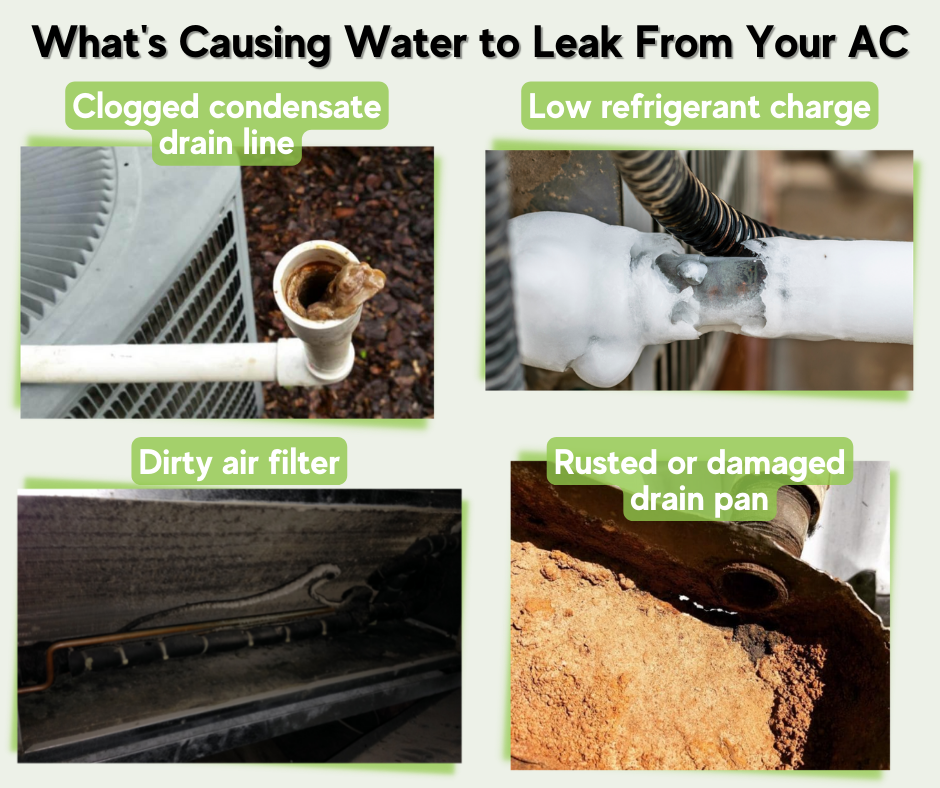
- Clogged condensate drain lines, causing water to back up and overflow.
- Cracked or rusted drip pans under air handlers, allowing water to escape into ceilings or floors.
- Frozen evaporator coils that thaw and leak water.
- Poorly insulated ductwork, which sweats and drips moisture.
- Improper AC sizing or airflow, which prevents the system from removing sufficient humidity.
If left unchecked, these minor issues can cause moisture to spread into walls, ceilings, insulation, and flooring, creating the perfect environment for mold.
Early Signs of AC Moisture Problems You Should Not Ignore
Recognizing the warning signs early can prevent extensive damage. Common indicators in Pompano Beach homes include:
1. Water Stains on Ceilings or Walls
Yellow or brown spots near vents, air handlers, or ceiling corners often indicate slow AC leaks. These stains typically grow over time, especially during the hot, humid months.
2. Musty or Damp Odors
Persistent musty smells are often caused by standing water or mold growth inside the AC system or ductwork.
3. Mold or Mildew Near Vents
Dark spots or fuzzy growth around vents or air handlers are a clear sign of excessive moisture.
4. Visible Water or Pooling
Water around air handlers, utility closets, or near AC units signals a drainage problem that must be addressed immediately.
5. High Indoor Humidity
If your home feels sticky or damp despite running the AC, your system may not be removing enough moisture.
6. Peeling Paint or Bubbling Drywall
Moisture trapped behind walls from AC leaks can cause paint to bubble or drywall to warp.
7. Warped Flooring or Baseboards
Water from AC leaks can seep into floors and trim, causing warping, staining, or deterioration.
8. Increased Allergy or Respiratory Symptoms
Mold spores released by AC moisture problems can trigger coughing, sneezing, headaches, and asthma symptoms.
Common Areas of Hidden AC Moisture Damage
Many homeowners focus only on visible areas, but moisture often hides in places that are rarely checked:
- Inside wall cavities near vents
- Above ceilings below attic air handlers
- Inside duct insulation
- Beneath air handler platforms
- Around clogged or damaged condensate drain lines
- Inside closets housing AC units
Professional inspection is usually necessary to locate and assess hidden damage.
AC Moisture Repair Solutions
Effective AC moisture repair addresses both the source of the problem and the resulting damage. Common solutions include:
1. Condensate Drain Line Cleaning and Repair
Clogged drain lines are one of the leading causes of AC water leaks. Professional cleaning, installation of safety float switches, or replacement of damaged lines can prevent backup and overflow.
2. Drip Pan Repair or Replacement
Cracked or rusted drip pans can allow water to escape. Options include sealing minor cracks, replacing corroded pans, or adding secondary drip pans in attic installations.
3. Evaporator Coil and Air Handler Maintenance
Dirty or frozen coils increase condensation risk. Cleaning coils, adjusting airflow, and maintaining proper refrigerant levels are essential preventive measures.
4. Ductwork Insulation and Sealing
Uninsulated or leaking ducts can sweat, dripping water into ceilings and walls. Re-insulating and sealing ducts improves moisture control and airflow efficiency.
5. System Sizing and Airflow Adjustments
Oversized or improperly balanced AC units fail to remove humidity effectively. Adjusting blower speeds, balancing airflow, and recommending upgrades when needed ensures proper dehumidification.
6. Mold Inspection and Remediation
If moisture has persisted for a while, mold inspection is critical. Professionals may perform air and surface testing, remove affected materials, apply antimicrobial treatments, and implement preventive measures.
7. Structural Drying and Dehumidification
After repairs, industrial dehumidifiers and air movers remove residual moisture from ceilings, walls, and flooring, preventing mold regrowth and structural deterioration.
Why DIY AC Moisture Fixes Often Fail
Homeowners sometimes try quick fixes like pouring bleach down drain lines or adjusting thermostats. These DIY solutions often:
- Miss hidden moisture behind walls or ceilings
- Fail to correct airflow or sizing issues
- Allow mold to develop unchecked
- Provide only temporary relief
Professional AC moisture repair ensures thorough assessment and long-term prevention.
Long-Term Risks of Ignoring AC Moisture Issues
Neglecting AC moisture problems can lead to:
- Extensive mold remediation
- Ceiling or floor collapse due to prolonged moisture
- Structural wood rot
- Electrical hazards
- Reduced indoor air quality
- Decreased home value
- Higher repair and insurance costs
Even a small, slow leak can turn into a major restoration project if left unaddressed.
Prevention Tips for Pompano Beach Homeowners
Preventing AC moisture problems requires regular maintenance and vigilance:
- Schedule annual HVAC inspections
- Clean condensate drain lines regularly
- Replace air filters as recommended
- Monitor indoor humidity levels
- Inspect ceilings and vents monthly
- Address minor leaks immediately
- Use dehumidifiers in areas prone to humidity
These steps reduce the risk of moisture buildup and help maintain healthy indoor air quality.
When to Call a Professional
Seek professional help immediately if you notice:
- Active water leaks from AC systems
- Mold growth near vents or air handlers
- Persistent high humidity indoors
- Water stains spreading on walls or ceilings
- Musty odors that linger
- Health symptoms worsening inside the home
Early intervention prevents serious damage and expensive restoration.
Special Considerations for Older Homes and Rentals
Older homes and rental properties in Pompano Beach are particularly vulnerable due to:
- Aging HVAC systems
- Outdated ductwork
- Poor insulation or ventilation
- Deferred maintenance
Landlords and property managers should schedule routine inspections to reduce liability and protect tenants.
Final Thoughts
AC moisture problems are a hidden but serious threat in Pompano Beach homes. Early detection is key. By recognizing warning signs, scheduling professional inspections, and implementing proper repair solutions, homeowners can prevent mold growth, structural damage, and health hazards. Maintaining AC systems and controlling moisture ensures comfort, safety, and long-term property value.
