
Early Signs You Should Not Ignore: Carpet Cleaning After Water Damage in Pompano Beach in Commercial Buildings
In Pompano Beach commercial buildings, water damage doesn’t need a dramatic flood to create serious carpet problems. A roof leak during a storm, a plumbing issue after hours, or AC condensation can soak carpet quietly—often overnight or over a weekend. By the time staff return, the surface may look “almost dry,” but moisture can already be trapped underneath.
Carpet cleaning after water damage in commercial spaces is time-sensitive and strategic. Early warning signs matter because delays increase odor complaints, disrupt operations, and raise the risk of deeper damage beneath flooring. Recognizing what not to ignore is the difference between a controlled recovery and a costly interruption.
Why Carpet Water Damage Is a Bigger Deal in Commercial Buildings
Commercial carpets cover larger areas, sit over extensive padding, and often rest on subfloors shared with cabling, partitions, or adjacent suites. When water enters, it spreads fast and dries slowly—especially in Pompano Beach’s humid climate.
Common challenges include:
- After-hours leaks that go unnoticed
- Limited ventilation in interior suites
- Constant AC use that masks dampness
- High foot traffic that pushes moisture deeper
What seems minor can quickly affect air quality and tenant comfort.
Early Signs Property Owners and Managers Should Not Ignore
Commercial carpet issues rarely announce themselves with standing water. The earliest signs are subtle but consistent.
Watch closely for:
- Musty or sour odors when the HVAC runs
- Carpet that feels cool or spongy underfoot
- Darkening along seams or edges near walls
- Rippling or loose carpet in walkways
- Rising indoor humidity despite cooling
These indicators usually point to moisture below the surface, not just surface dampness.
Common Causes of Carpet Water Damage in Pompano Beach Commercial Spaces
Understanding the source helps determine the right response.
Typical causes include:
- Roof leaks during heavy rain or storms
- Plumbing failures in restrooms or break areas
- AC drain pan overflows or clogged condensate lines
- Water intrusion at storefront doors or loading areas
- Minor flooding from drainage issues
Repeated small events can be just as damaging as one large incident.
Why Inspection Must Come Before Cleaning
In commercial settings, cleaning without inspection often fails. The priority is determining how far moisture traveled and whether materials are salvageable.
A proper inspection typically includes:
- Moisture detection in carpet, padding, and subfloor
- Identifying the water source and duration
- Checking adjacent suites and wall lines
- Assessing whether padding can be dried or needs replacement
Skipping inspection risks odor return, repeat downtime, and tenant complaints.
Hidden Moisture Beneath Commercial Carpet
Padding and subfloors hold moisture long after the surface feels dry. In Pompano Beach, high humidity slows evaporation—especially under large carpeted areas.
Professionals often find moisture:
- Along exterior walls after wind-driven rain
- Under heavy fixtures or partitions
- Near AC closets and return vents
- In shared corridors connecting suites
Without moisture mapping, these areas are easily missed.
Why DIY or Surface-Only Drying Falls Short
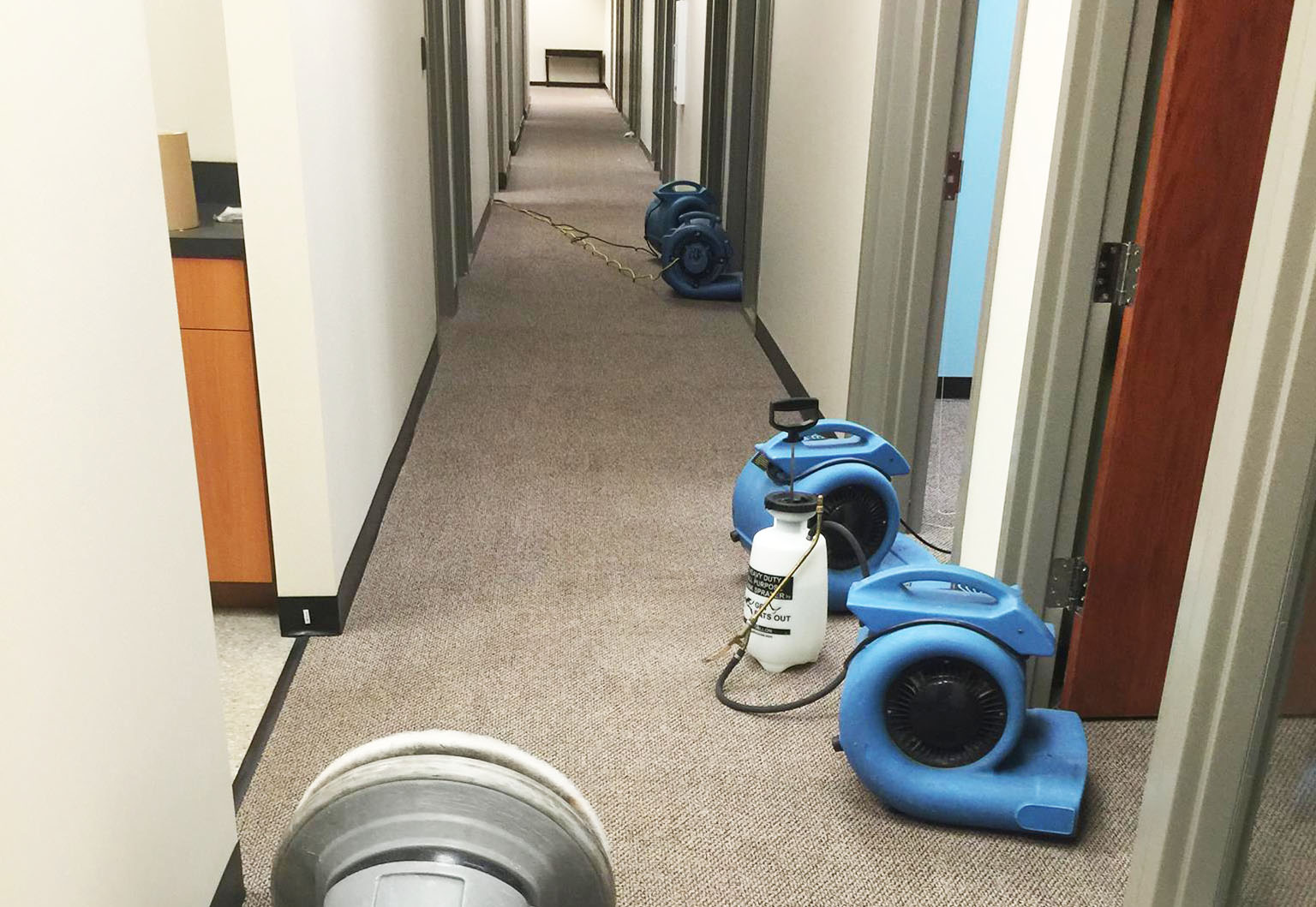
Fans and portable dehumidifiers help the surface but rarely solve the problem in commercial spaces.
Surface-only drying fails because:
- Padding retains water far longer than fibers
- Subfloors dry unevenly
- Odors resurface when humidity rises
- The original moisture source may still be active
Commercial recovery requires layered drying and monitoring.
Professional Carpet Cleaning After Water Damage Explained
Once inspection confirms drying is feasible, professional cleaning follows a controlled sequence designed for commercial environments.
The process often includes:
- Water extraction from carpet and padding
- Controlled drying with commercial air movers and dehumidifiers
- Moisture monitoring until safe levels are reached
- Deep cleaning after drying is complete
- Odor control when necessary
Cleaning too early can lock in odors and contaminants.
Local providers such as Pompano Mold Inspection and Testing treat carpet cleaning as part of a broader water-damage strategy, coordinating drying, inspection, and prevention to minimize disruption.
When Padding Repair or Replacement Is Necessary
Padding determines whether carpet can be saved. In commercial buildings, replacement is often the right call when:
- Padding stayed wet for an extended period
- Odors persist after drying attempts
- Water was contaminated or recurred
- Padding has lost structure or resilience
Replacing padding while preserving carpet can restore performance without full flooring replacement.
The Connection Between Wet Carpet and Mold Risk
Sustained moisture beneath carpet creates ideal conditions for mold—especially in Pompano Beach’s climate. Mold may develop out of sight before any surface signs appear.
Early inspection and drying help:
- Reduce mold-friendly conditions
- Identify high-risk zones
- Support targeted mold inspection when appropriate
Prompt action often avoids larger remediation projects.
Carpet Care After Storms or Minor Flooding
Storms don’t need to flood a building to affect carpets. Wind-driven rain and brief intrusions commonly soak edges and corridors.
Post-storm best practices include:
- Moisture checks even if carpets look dry
- Focused drying along seams and door lines
- Coordinating with water removal services
This prevents delayed odor and rewetting issues.
Repairing Surrounding Materials After Drying
After carpets are dry, surrounding repairs may be needed to ensure a full recovery.
These may include:
- Baseboard or cove base replacement
- Minor drywall repair
- Subfloor spot repairs
- Carpet re-stretching or reinstallation
Completing these steps prevents repeat problems.
Preventing Repeat Carpet Water Damage
Commercial properties can reduce future risk with proactive measures:
- Regular roof and plumbing inspections
- Routine AC drain line maintenance
- Prompt response to small leaks
- Post-storm moisture checks
- Periodic moisture assessments in high-risk areas
Prevention reduces downtime and protects tenant relationships.
Why Local Experience Matters in Pompano Beach
Drying and odor control behave differently in South Florida’s humidity. Local experience matters because professionals understand how coastal weather, building layouts, and HVAC usage affect commercial carpet recovery.
That regional insight leads to faster stabilization and fewer repeat issues.
A Practical Takeaway for Property Owners
In Pompano Beach commercial buildings, early signs after water damage should never be ignored—especially when carpets are involved. What looks minor today can become a disruption tomorrow if moisture remains trapped below the surface.
If your building shows odors, dampness, or changes in carpet condition after water exposure, a professional inspection can clarify the safest next step. Acting early keeps recovery controlled, operations moving, and long-term costs down in Florida’s demanding climate.
