
How Carpet Cleaning After Water Damage Helps Homes and Commercial Buildings in Pompano Beach
Water damage is a serious concern for commercial buildings in Pompano Beach, especially given the area’s humid climate, frequent storms, and heavy summer rainfall. Offices, retail spaces, medical facilities, and mixed-use properties often rely on carpeted flooring for comfort and sound control, but carpet is one of the first materials to suffer when water intrusion occurs.
Carpet cleaning after water damage is not just about appearance. In commercial environments, it plays a critical role in protecting indoor air quality, preventing mold growth, reducing downtime, and preserving the long-term value of the property.
Why Commercial Carpets Are Highly Vulnerable to Water Damage
Carpet systems in commercial buildings are complex. They consist of surface fibers, backing, padding, adhesives, and subfloor materials. When water enters the space, it doesn’t stay on the surface—it moves downward and spreads outward.
In Pompano Beach’s humid environment, this moisture dries very slowly, creating ideal conditions for bacteria and mold if not handled properly.
Common Causes of Carpet Water Damage in Commercial Buildings
- Storm-related flooding or wind-driven rain
- Roof leaks over office or retail spaces
- Plumbing failures in restrooms or break rooms
- HVAC condensation or drain line clogs
- Fire suppression system discharges
- Poor drainage around commercial foundations
Because commercial buildings often have large carpeted areas, even a small water event can affect thousands of square feet quickly.
Why Water-Damaged Carpet Is a Serious Commercial Risk
Ignoring or delaying carpet cleaning after water damage can lead to much more than cosmetic issues.
Mold and Microbial Growth
Carpet fibers and padding trap moisture efficiently. In warm, humid conditions, mold can begin developing within 24 to 48 hours. Once mold forms beneath the carpet, it often spreads unnoticed until odors or health complaints arise.
Indoor Air Quality Concerns
Commercial buildings must maintain safe indoor air quality for:
- Employees
- Customers
- Patients or clients
Water-damaged carpets can release mold spores, bacteria, and unpleasant odors into the air, impacting comfort, productivity, and health.
Structural and Material Damage
Moisture trapped in carpet systems can:
- Break down carpet adhesives
- Damage subfloors
- Cause warping or deterioration of underlying materials
- Lead to widespread flooring replacement
Prompt carpet cleaning and drying help prevent damage from spreading beyond the carpet itself.
Why Carpet Cleaning After Water Damage Is Essential
Professional carpet cleaning after water damage addresses both visible moisture and hidden contamination. Simply extracting surface water is not enough in commercial settings.
Key Benefits of Post-Water-Damage Carpet Cleaning
- Removes trapped moisture from carpet and padding
- Reduces mold and bacterial growth risk
- Improves indoor air quality
- Helps salvage carpet and avoid replacement
- Supports faster reopening of commercial spaces
In many cases, professional cleaning and drying can save carpets that would otherwise need to be removed.
What Professional Carpet Cleaning After Water Damage Involves
Effective carpet cleaning after water damage follows a structured process designed to handle large commercial spaces safely and efficiently.
Step 1: Assessment and Moisture Mapping
Professionals evaluate:
- The source and category of water damage
- The extent of moisture saturation
- Affected carpeted areas and subfloors
Moisture detection tools are used to identify hidden dampness beneath the carpet.
Step 2: Water Extraction
High-capacity extraction equipment removes standing and embedded water from carpet fibers and padding. Fast extraction is critical to prevent moisture migration into walls and adjacent flooring.
Step 3: Carpet Lifting and Padding Treatment
In many commercial cases:
- Carpets may be partially lifted
- Saturated padding may be dried separately or removed
- Subfloors are inspected and dried
This step is essential to ensure moisture is not trapped beneath the surface.
Step 4: Controlled Drying and Dehumidification
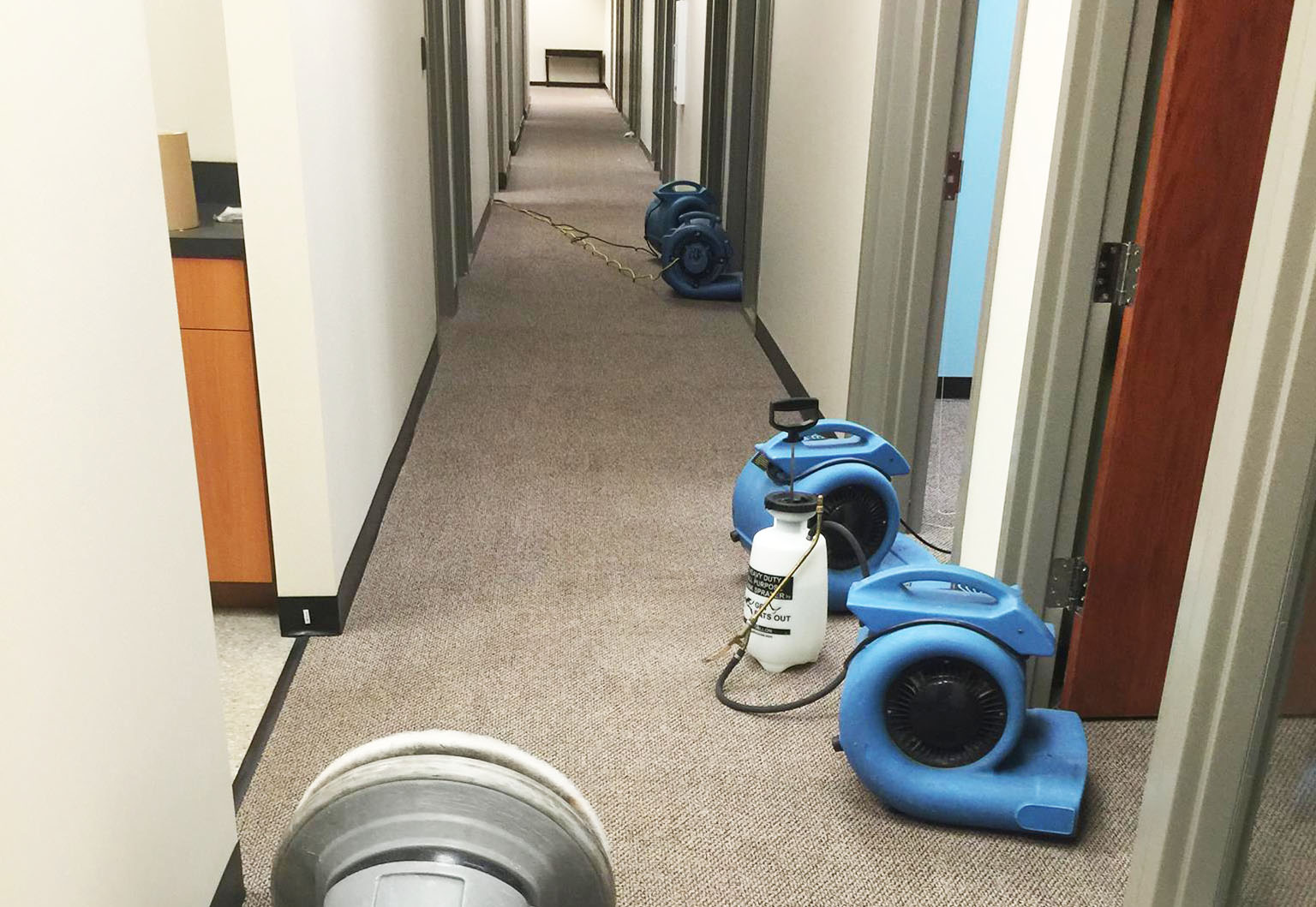
Industrial air movers and dehumidifiers are placed strategically to:
- Dry carpet fibers evenly
- Reduce indoor humidity
- Prevent secondary moisture damage
Drying progress is monitored to ensure commercial-grade standards are met.
Step 5: Cleaning and Sanitization
Once dry:
- Carpets are cleaned using professional extraction methods
- Antimicrobial treatments may be applied
- Odors are neutralized
This step restores cleanliness and helps protect indoor air quality.
Why Humidity Makes Carpet Cleaning More Critical in Pompano Beach
Florida’s humidity changes how water damage behaves. Moisture does not evaporate quickly, especially in large commercial interiors with limited airflow.
High humidity:
- Slows drying times
- Encourages mold growth
- Allows odors to persist
- Increases the risk of recurring moisture problems
Professional carpet cleaning accounts for these conditions by combining drying with humidity control and verification.
The Cost of Delaying Carpet Cleaning in Commercial Buildings
In commercial environments, delays can be costly in multiple ways.
Financial and Operational Risks
- Increased mold remediation costs
- Carpet and padding replacement
- Business interruption or closure
- Employee complaints or health issues
- Insurance claim complications
Prompt carpet cleaning after water damage often reduces total restoration costs and limits operational downtime.
Insurance and Compliance Considerations
Many commercial insurance policies require timely mitigation after water damage. Professional carpet cleaning provides:
- Documentation of drying and cleaning
- Moisture readings and reports
- Evidence of responsible action
This documentation can be critical for claim approval and compliance with building standards.
Health and Productivity Benefits for Commercial Spaces
Water-damaged carpets don’t just affect the building—they affect the people inside it.
Benefits of Proper Carpet Cleaning
- Reduced allergens and airborne contaminants
- Fewer odors that impact comfort
- Improved employee productivity
- Healthier indoor environment for customers and staff
In offices, medical facilities, and retail spaces, these factors directly impact reputation and performance.
When Carpet Replacement Is Necessary
Not all carpets can be saved. Replacement may be required when:
- Water damage is severe or prolonged
- Carpet padding is heavily contaminated
- Mold growth is extensive
- Floodwater contamination is present
However, early professional carpet cleaning often prevents the need for full replacement.
Preventing Future Carpet Water Damage in Commercial Buildings
Prevention is always more cost-effective than restoration.
Practical Prevention Strategies
- Regular roof and plumbing inspections
- Routine HVAC maintenance
- Proper drainage around the building
- Immediate response to leaks or spills
- Maintaining indoor humidity control
Proactive maintenance reduces the likelihood of repeated carpet damage.
Why Carpet Cleaning After Water Damage Matters in Pompano Beach
In a humid coastal city like Pompano Beach, water damage doesn’t resolve itself. Moisture spreads, mold grows, and carpets become long-term liabilities if not handled correctly.
Professional carpet cleaning after water damage helps commercial buildings:
- Recover faster
- Maintain safe indoor environments
- Protect structural components
- Preserve flooring investments
Final Thoughts
Carpet cleaning after water damage is a critical part of commercial property protection in Pompano Beach. High humidity, frequent storms, and large carpeted spaces create unique challenges that require professional attention.
By responding quickly and using proper carpet cleaning and drying methods, commercial building owners can reduce mold risk, improve indoor air quality, minimize downtime, and protect the long-term value of their properties. In South Florida’s climate, thorough carpet cleaning after water damage isn’t optional—it’s essential.
