

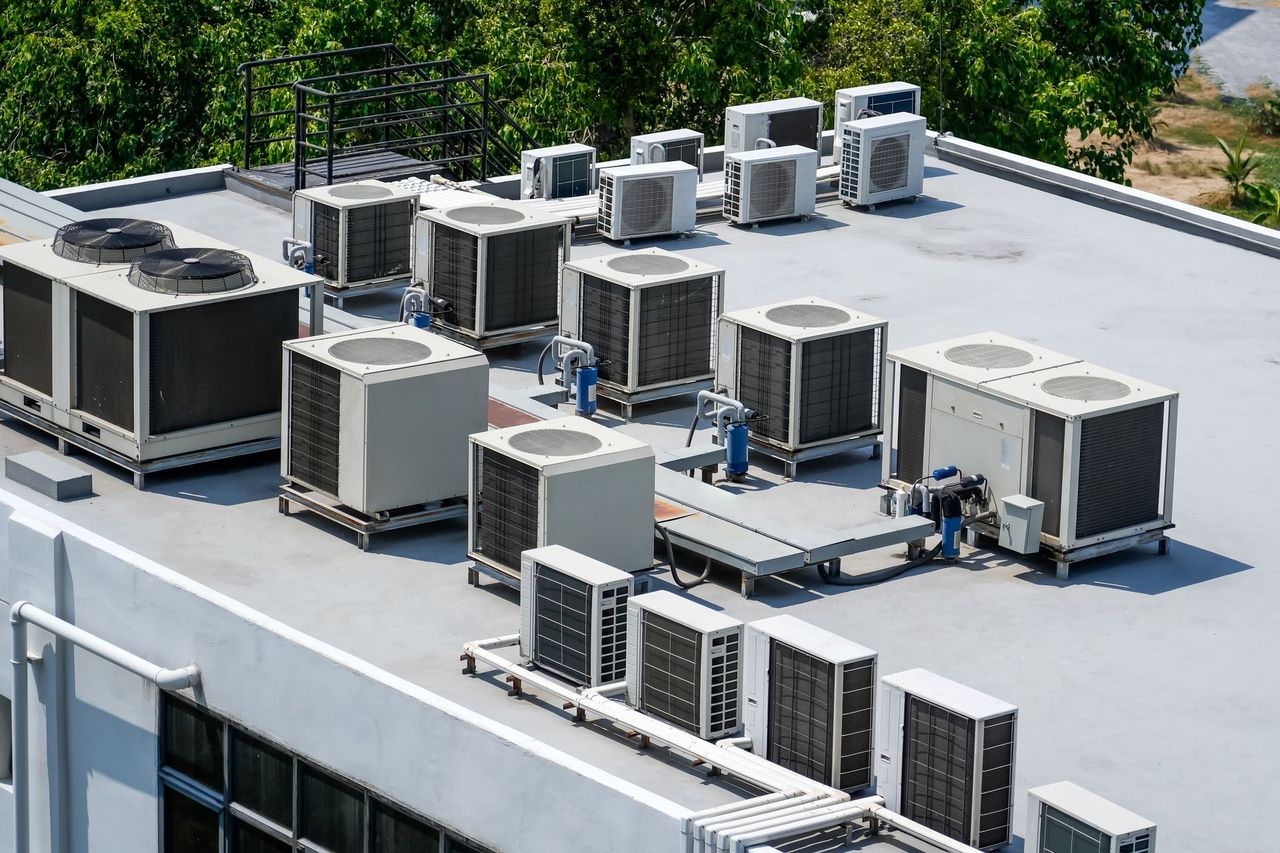
How Indoor Air Quality Improvement Helps Homes in Deerfield Beach in Commercial Buildings
In Deerfield Beach, commercial buildings operate in a challenging environment defined by high humidity, frequent storms, and heavy air-conditioning use. Offices, retail spaces, medical facilities, and multi-tenant properties often struggle with indoor air quality issues that are not immediately visible but steadily affect comfort, maintenance costs, and building performance.
Indoor air quality improvement in commercial buildings is not just about cleaner air. In South Florida, it is primarily about moisture control, airflow balance, and preventing hidden problems that develop when humid air lingers inside large, complex structures.
Why Indoor Air Quality Is a Bigger Challenge in Commercial Buildings
Commercial buildings in Deerfield Beach have larger interior spaces, longer HVAC run times, and more complex air distribution systems than residential homes.
High occupancy levels introduce additional moisture through everyday use. Restrooms, break rooms, and cleaning activities add humidity that must be managed constantly.
Many commercial properties rely on centralized HVAC systems. When even a small part of the system has moisture or airflow issues, the impact spreads throughout the building.
Tightly sealed buildings designed for energy efficiency can trap humid, stale air if ventilation is not properly balanced.
These factors make indoor air quality improvement especially important in commercial settings.
How Humidity Affects Indoor Air in Deerfield Beach
Humidity is the primary driver of indoor air quality problems in Deerfield Beach.
Moist air feels heavy and uncomfortable, even when temperatures are controlled.
Excess humidity allows odors to linger longer and makes airborne particles stay suspended in the air.
When moisture enters walls, ceilings, ductwork, or insulation, it slowly releases humidity back into occupied spaces.
Without proper control, indoor air quality problems persist regardless of surface cleaning or filter changes.
Common Indoor Air Quality Issues in Commercial Properties
Musty or stale odors in offices, hallways, or storage areas.
Uneven comfort between rooms or floors due to airflow imbalance.
Condensation on vents, windows, or ceilings.
Employees or tenants reporting stuffy air or discomfort during normal operation.
Dust or debris circulating more frequently, especially during humid periods.
These issues often indicate moisture or ventilation problems rather than cleanliness alone.
How Indoor Air Quality Improvement Begins
Effective indoor air quality improvement always starts with assessment.
Professionals evaluate humidity levels, airflow patterns, HVAC performance, and recent water exposure.
Moisture detection tools are used to locate hidden damp areas inside walls, ceilings, floors, or mechanical spaces.
Ventilation and air distribution are reviewed to identify areas where air becomes trapped or stagnant.
This process ensures improvements target root causes instead of temporary symptoms.
Moisture Control as the Foundation
In Deerfield Beach commercial buildings, moisture control is the foundation of indoor air quality improvement.
Condensation from HVAC systems, plumbing leaks, or storm intrusion must be identified and corrected.
Controlled drying removes moisture from building materials, not just from the air.
Dehumidification stabilizes indoor humidity levels, especially during summer months when outdoor air remains saturated.
Without moisture control, other air quality measures provide limited results.
Pompano Mold Inspection and Testing incorporates moisture detection and drying as a core part of indoor air quality improvement services for Deerfield Beach commercial properties.
HVAC Systems and Commercial Air Quality
HVAC systems play a central role in indoor air quality.
Condensation inside air handlers, return plenums, or ductwork can undermine comfort and airflow.
Restricted airflow or poorly balanced systems allow humid air to collect in certain zones.
Indoor air quality improvement often includes evaluating HVAC components to ensure they are clean, dry, and operating as intended.
Properly functioning systems distribute treated air evenly and maintain stable conditions throughout the building.
Air Filtration and Particle Control
In commercial environments, airborne particles circulate more easily due to larger air volumes and constant movement.
Improved filtration helps capture dust, debris, and fine particles that remain suspended longer in humid air.
Filtration upgrades are most effective when combined with moisture control, as dry air allows particles to settle or be captured more efficiently.
This results in cleaner-feeling air and reduced buildup inside HVAC systems.
Ventilation and Airflow Balance
Poor ventilation allows humid air to stagnate in restrooms, storage rooms, mechanical spaces, and low-traffic areas.
Indoor air quality improvement includes evaluating exhaust systems and fresh air intake.
Balanced airflow ensures that conditioned, dehumidified air reaches all areas of the building.
Proper ventilation reduces odor buildup and helps maintain consistent comfort across different zones.
Benefits for Building Operations and Occupants
Improved indoor air quality creates a more comfortable environment for employees, tenants, and visitors.
HVAC systems operate more efficiently when moisture and airflow are controlled.
Building materials such as drywall, ceiling tiles, and flooring last longer when humidity is stabilized.
Odors are less likely to return after storms or seasonal humidity spikes.
Overall maintenance costs are reduced through early detection and prevention.
Indoor Air Quality Improvement After Storms or Water Events
Storms and heavy rain often introduce hidden moisture into commercial buildings.
Indoor air quality improvement helps identify and remove residual moisture before it affects long-term conditions.
Early action after storms prevents lingering odors and future repair needs.
This proactive approach is especially important in Deerfield Beach’s storm-prone environment.
Prevention Methods That Work in Commercial Buildings
Maintain HVAC systems regularly to prevent condensation and drainage issues.
Monitor indoor humidity levels year-round.
Inspect mechanical rooms and utility areas for poor ventilation.
Address water intrusion and leaks immediately.
Schedule inspections after storms or unusual humidity events.
Use air quality assessments as part of preventive maintenance planning.
Why Local Experience Matters in Deerfield Beach
Commercial buildings in Deerfield Beach face unique challenges related to coastal humidity, storm exposure, and construction styles.
Local professionals understand how moisture and air behave in South Florida commercial environments.
This experience leads to more accurate assessments and more effective long-term solutions.
A Practical Takeaway for Property Owners and Managers
Indoor air quality improvement in Deerfield Beach commercial buildings is not a cosmetic upgrade. It is a preventive strategy that protects comfort, operations, and long-term property value.
By focusing on moisture control, airflow balance, and HVAC performance, property owners can create healthier, more stable indoor environments even during Florida’s most humid seasons.
A proactive approach to indoor air quality is one of the most effective ways to manage risk and maintain performance in South Florida commercial buildings.
