What Property Owners Should Know: Indoor Air Quality Improvement in Coconut Creek in Commercial Buildings
Indoor air quality is a growing concern for commercial property owners in Coconut Creek. Offices, retail spaces, medical facilities, and other commercial buildings depend on clean, properly circulated air to maintain comfortable working environments and protect building materials from moisture-related problems. In South Florida’s humid climate, indoor air quality challenges often develop gradually and may go unnoticed until occupants begin to experience discomfort or maintenance issues appear.
Understanding how indoor air quality problems develop, how they are corrected, and how they can be prevented helps property owners maintain safe, efficient, and well-maintained commercial buildings.
What Indoor Air Quality Means in Commercial Buildings
Indoor air quality refers to the condition of the air inside a building, including humidity levels, ventilation, airborne particles, and the presence of contaminants. In commercial properties, indoor air quality is influenced by HVAC systems, occupancy levels, building materials, and environmental conditions.
When air circulation is inadequate or moisture levels rise, contaminants such as dust, debris, and microbial growth may accumulate. Poor indoor air quality can lead to odors, uneven temperatures, and increased maintenance issues in ventilation systems.
Improving air quality involves identifying sources of contamination, controlling humidity, and ensuring proper airflow throughout the building.
Why Indoor Air Quality Issues Are Common in Coconut Creek
Coconut Creek’s climate plays a major role in indoor air quality challenges. High humidity persists throughout most of the year, and frequent rainstorms increase moisture levels both indoors and outdoors.
Commercial buildings rely heavily on air conditioning systems to control temperature and humidity. When HVAC systems are not properly maintained, condensation can accumulate in ducts, ceilings, and mechanical rooms, allowing moisture to linger.
Another factor is the size and complexity of commercial ventilation systems. Larger duct networks and higher occupancy levels can contribute to dust buildup and uneven airflow if systems are not inspected and cleaned regularly.
Buildings that remain closed for long periods, such as storage facilities or seasonal businesses, may also experience stale air and humidity buildup due to limited ventilation.
Common Causes of Poor Indoor Air Quality
Several issues frequently contribute to indoor air quality problems in commercial buildings:
- Dirty or clogged air ducts
- Poor ventilation or restricted airflow
- Excess humidity or moisture buildup
- AC condensation and clogged drain lines
- Water damage from roof or plumbing leaks
- Dust and debris accumulation in HVAC systems
- Infrequent maintenance of filters and coils
These factors often occur together, making professional inspection an important first step in improving air quality.
Signs Property Owners Should Watch For
Indoor air quality problems often develop gradually. Property owners and facility managers may notice early warning signs such as:
- Musty or stale odors
- Uneven cooling or temperature variations
- Increased dust accumulation on surfaces
- Condensation on vents or windows
- Persistent humidity in certain areas
- Occupant complaints about air freshness
These symptoms often indicate airflow or moisture issues that require further evaluation.
Hidden Sources of Air Quality Problems
Some of the most significant air quality issues develop in areas that are not visible during routine maintenance. Air ducts located in ceilings or attics may accumulate dust and moisture over time. If insulation around ducts becomes damaged, condensation may form and contribute to microbial growth.
Mechanical rooms and utility spaces may also trap humidity if ventilation is inadequate. Water-damaged insulation or ceiling materials can release odors and particles into the air long after the original problem appears to be resolved.
Because these areas are not always inspected regularly, problems can persist for months without being detected.
Why DIY Solutions Are Often Ineffective
In commercial settings, property owners sometimes attempt to improve air quality by increasing ventilation or replacing filters. While these steps can help temporarily, they rarely address underlying problems such as duct contamination, hidden moisture, or ventilation imbalances.
Portable air purifiers and dehumidifiers may improve conditions in small areas but are not designed to handle the scale of most commercial buildings. Without identifying the root cause, air quality problems often return.
Professional evaluation ensures that both the source of contamination and contributing environmental factors are addressed.
Professional Indoor Air Quality Assessment Explained
Improving indoor air quality begins with a thorough inspection of the building. Professionals evaluate HVAC systems, ventilation pathways, and moisture levels to identify contributing factors.
This process may include:
- Measuring humidity levels throughout the building
- Inspecting air ducts and ventilation components
- Checking for moisture intrusion or water damage
- Evaluating airflow and system performance
- Identifying areas where contaminants may accumulate
Professionals familiar with local conditions, such as Pompano Mold Inspection and Testing, often find that humidity and ventilation issues are key contributors to air quality concerns in Coconut Creek commercial buildings.
The Role of Air Duct Cleaning and HVAC Maintenance
Air ducts play a central role in indoor air quality. Dust, debris, and moisture inside ducts can circulate throughout a building, affecting multiple rooms at once.
Professional duct cleaning removes accumulated particles and helps restore proper airflow. Cleaning also allows technicians to inspect ducts for leaks, damaged insulation, or condensation problems.
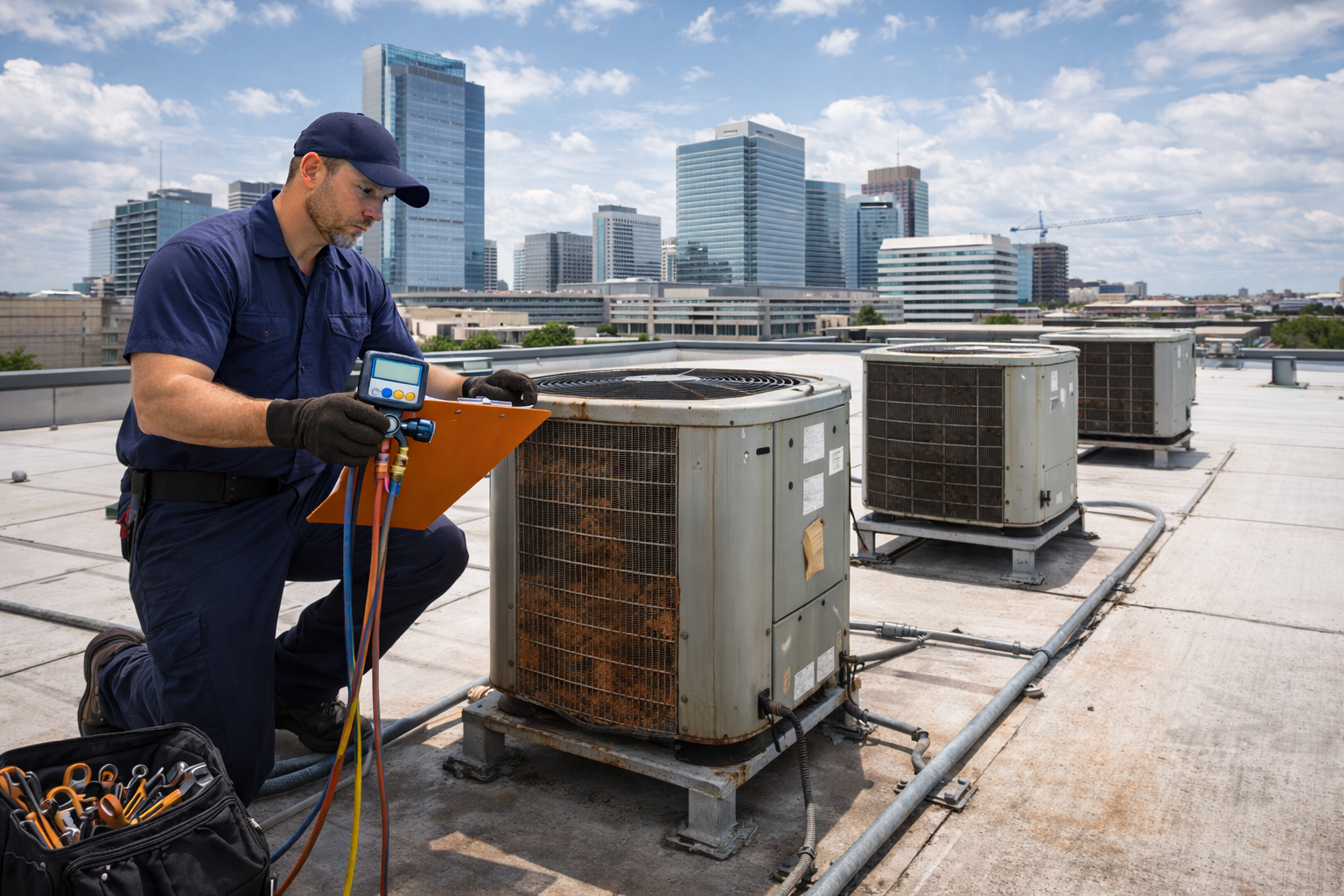
Regular HVAC maintenance is equally important. Clean coils, clear drain lines, and properly functioning fans help control humidity and improve system efficiency.
Moisture Control and Water Damage Repair
Moisture is one of the most significant factors affecting indoor air quality in South Florida. Roof leaks, plumbing issues, or condensation can introduce moisture into ceilings, walls, and insulation.
Water damage repair and moisture detection help identify and correct these issues before they affect air quality. Thorough drying and repair prevent odors and microbial growth from developing in hidden areas.
Improving ventilation in storage rooms, mechanical spaces, and restrooms also helps reduce humidity levels.
Preventing Indoor Air Quality Problems in Commercial Buildings
Preventive maintenance is one of the most effective ways to maintain healthy indoor air quality. Property owners in Coconut Creek can reduce risks by:
- Scheduling routine HVAC inspections and maintenance
- Replacing air filters regularly
- Cleaning air ducts periodically
- Monitoring indoor humidity levels
- Inspecting roofs and plumbing systems for leaks
- Ensuring proper ventilation in restrooms and kitchens
Routine inspections help detect small problems early, preventing costly repairs and disruptions.
Why Local Experience Matters
Commercial buildings in Coconut Creek, Margate, Deerfield Beach, and nearby Broward County communities face similar climate challenges. High humidity, heavy rains, and year-round air conditioning create conditions that require specialized knowledge to manage effectively.
Pompano Mold Inspection and Testing has worked with many commercial property owners across the region, helping identify hidden moisture and ventilation issues that affect indoor air quality. Local experience helps ensure that solutions are tailored to South Florida’s climate and construction practices.
A Practical Approach for Property Owners
Improving indoor air quality is not a one-time task but an ongoing process. Regular maintenance, timely inspections, and prompt repairs help ensure that commercial buildings remain comfortable, efficient, and safe for occupants.
For property owners in Coconut Creek, focusing on ventilation, moisture control, and HVAC performance is the most effective way to prevent indoor air quality problems. By addressing issues early and maintaining systems properly, commercial buildings can provide healthier environments and avoid costly repairs in the future.