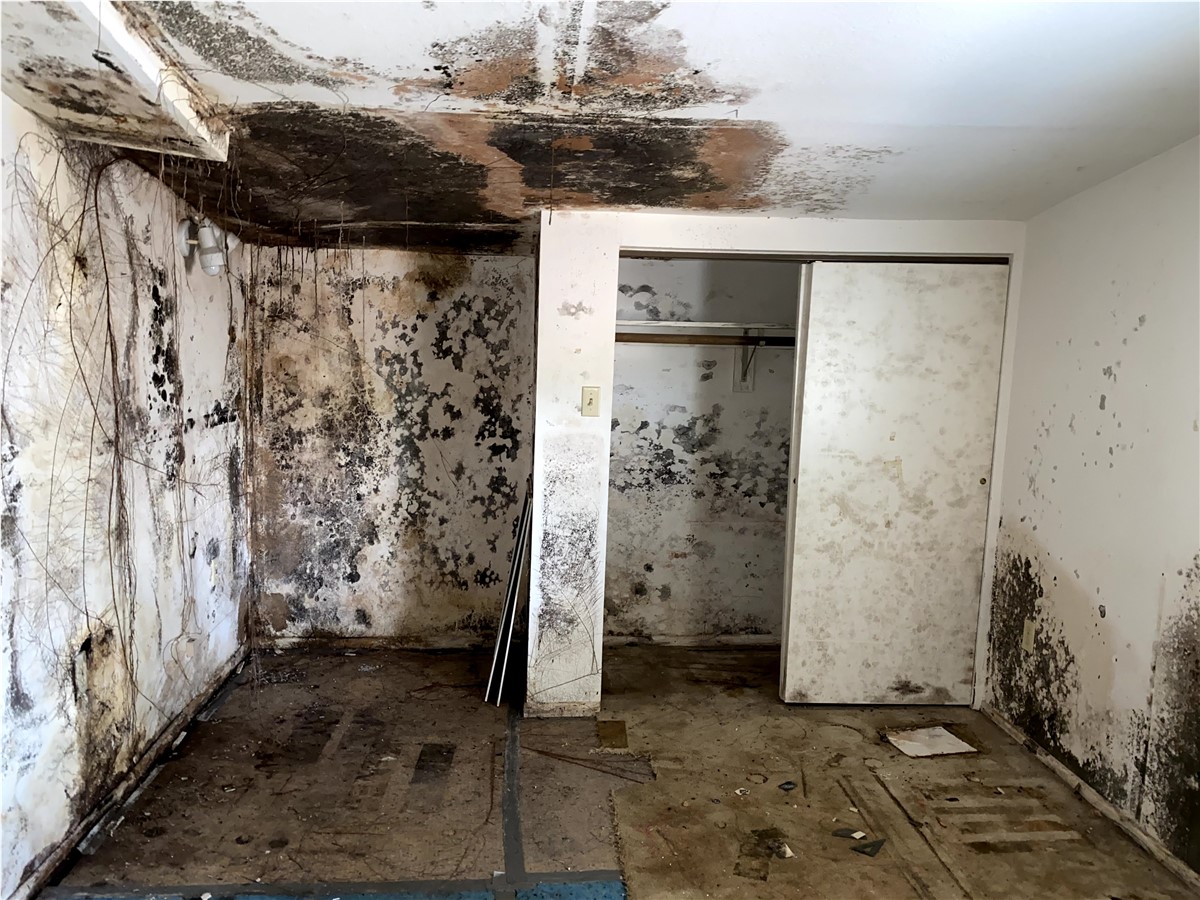
Black mold is a serious concern for homeowners in Fort Lauderdale, especially in South Florida’s humid and storm-prone environment. It often develops in areas with persistent moisture, such as bathrooms, attics, crawl spaces, or near leaking roofs. Black mold can damage building materials, reduce indoor air quality, and cause ongoing maintenance problems if not addressed properly.
Understanding inspection, removal, and repair processes is essential for Fort Lauderdale homeowners, landlords, and property managers. Nearby communities like Pompano Beach, Deerfield Beach, Lighthouse Point, Margate, Coconut Creek, North Lauderdale, and Lauderdale-by-the-Sea face similar challenges, making professional guidance critical.
What Black Mold Is and Why It Occurs
Black mold, often referred to as Stachybotrys chartarum, thrives in damp, humid environments. It grows on organic materials like drywall, wood, insulation, and ceiling tiles. In Fort Lauderdale homes, black mold often develops after:
- Roof leaks or storm water intrusion
- Plumbing leaks under sinks or behind walls
- Flooding or water damage
- Condensation from air conditioning systems
- Poor ventilation in bathrooms, kitchens, or attics
Even small, hidden patches can spread quickly if moisture is not controlled.
Why Black Mold Is Common in Fort Lauderdale
Several local factors contribute to recurring black mold issues:
- High humidity year-round
- Heavy seasonal rainfall and tropical storms
- Coastal properties exposed to salt air and wind-driven rain
- Older homes with slab foundations and limited ventilation
- AC systems creating condensation in poorly insulated areas
These conditions make moisture control and regular inspection critical for maintaining safe indoor environments.
Signs That Black Mold May Be Present
Homeowners often notice the following indicators:
- Musty or earthy odors that persist indoors
- Dark spots or streaks on walls, ceilings, or baseboards
- Peeling paint, bubbling drywall, or warped flooring
- Damp or soft spots in carpets, tiles, or subflooring
- Recurring allergic reactions or respiratory discomfort
Visible mold is often just the surface of a larger problem hidden within building materials.
Hidden Areas Where Black Mold Often Grows
Black mold frequently develops in areas that are difficult to inspect visually, including:
- Inside wall cavities near bathrooms or kitchens
- Beneath tile, laminate, or hardwood flooring
- Attics with roof leaks or insufficient ventilation
- Around air handlers and inside ductwork
- Under sinks and behind appliances
Professional mold inspection is essential to detect these hidden sources before damage spreads.
Why DIY Mold Removal Usually Fails
Many homeowners attempt to clean black mold with household products. While these methods may temporarily remove visible spots, they often fail to address the underlying problem. DIY removal commonly fails because it:
- Misses hidden mold behind walls, under flooring, or inside ducts
- Does not correct moisture sources that allow mold to regrow
- Risks spreading spores to other areas of the home
- Lacks specialized equipment for safe removal
Professional mold remediation ensures complete, safe removal and helps prevent recurrence.
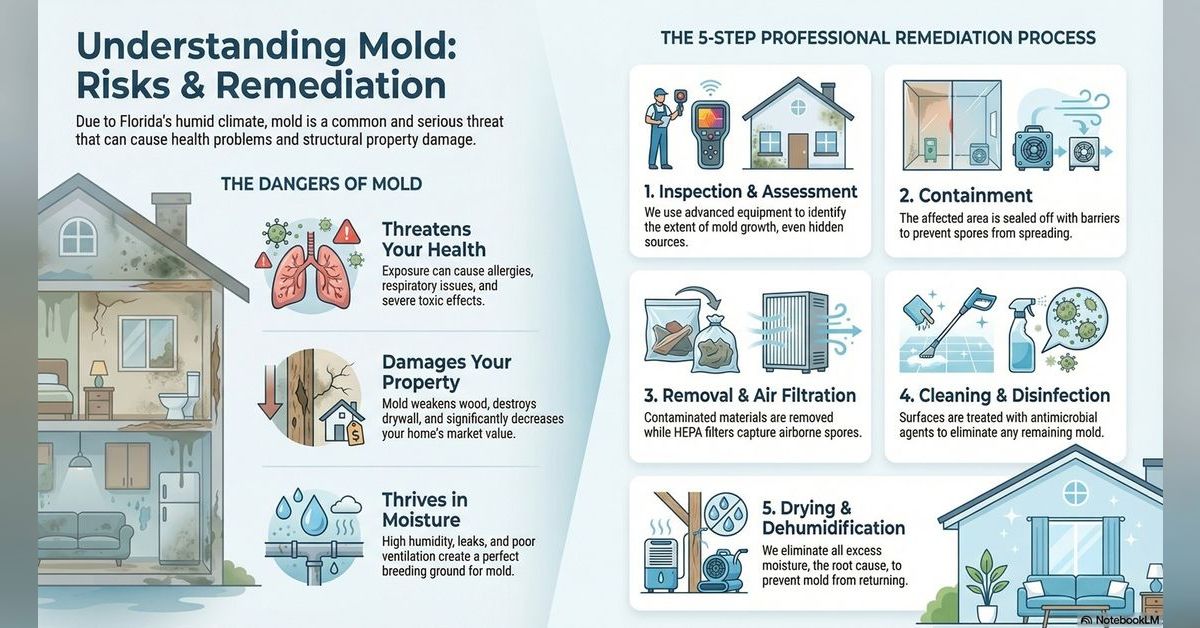
Step 1: Inspection and Assessment
Professional black mold removal begins with a thorough inspection. This includes:
- Visual inspection of affected areas
- Moisture detection using specialized meters
- Infrared imaging to locate hidden dampness
- Mold testing when necessary
- Evaluation of HVAC systems and ventilation
Companies like Pompano Mold Inspection and Testing understand Fort Lauderdale homes and the unique ways mold develops in South Florida’s humid climate.
Step 2: Containment and Safety Measures
To prevent mold from spreading, professionals seal off affected areas. Containment may include:
- Closing off rooms with plastic sheeting
- Using negative air pressure systems
- Protecting unaffected areas during cleaning
Containment ensures safety and minimizes the spread of spores during remediation.
Step 3: Removal of Contaminated Materials
Black mold remediation often requires removing:
- Mold-infested drywall or insulation
- Damaged flooring or subflooring
- Contaminated ceiling tiles or wood materials
Removal is done carefully to reduce the release of spores into the home and to ensure complete elimination.
Step 4: Cleaning and Treatment
Remaining surfaces are treated with specialized cleaning agents and antimicrobial solutions to remove mold residues. This step ensures:
- Spores are eliminated from affected areas
- Odors are reduced
- Surfaces are prepared for repairs
Professional treatment is far more effective than household cleaners at fully eliminating mold.
Step 5: Drying and Moisture Control
Drying the property and controlling moisture is essential to prevent mold from returning. Professionals use:
- Industrial dehumidifiers and air movers
- Moisture meters to confirm dryness
- Inspections of AC systems, vents, and ductwork
Ensuring proper drying and ventilation is critical in Fort Lauderdale’s humid climate.
Step 6: Repair and Restoration
After mold removal, repairs restore the property to its original condition. This may involve:
- Installing new drywall, flooring, or insulation
- Sealing roof leaks or plumbing issues
- Adjusting ventilation systems or AC components
These steps prevent future mold growth and maintain indoor air quality.
Air Ducts, AC Systems, and Mold
AC systems can contribute to mold growth if moisture accumulates. Post-remediation inspections often include:
- Checking ducts and return vents for moisture
- Cleaning air handlers and drip pans
- Repairing clogged or damaged drain lines
- Improving airflow and insulation
Addressing HVAC-related moisture prevents black mold from recurring throughout the home.
Preventing Black Mold in Fort Lauderdale Homes
Preventative steps help protect homes long-term:
- Regular mold inspections, especially after water intrusion
- Monitoring and controlling indoor humidity
- Maintaining roofs, plumbing, and AC systems
- Addressing leaks immediately
- Ensuring proper ventilation in bathrooms, kitchens, and attics
These measures are especially important for waterfront homes and older properties.
Why Local Experience Matters
Black mold behaves differently in coastal Fort Lauderdale homes due to humidity, storms, and building styles. Professionals familiar with Fort Lauderdale, Pompano Beach, Deerfield Beach, Lighthouse Point, Margate, Coconut Creek, North Lauderdale, and Lauderdale-by-the-Sea know where mold typically develops and how to remediate it effectively.
Local expertise ensures inspections, removal, and repairs are precise, practical, and long-lasting.
A Calm, Practical Next Step for Homeowners
Black mold removal in Fort Lauderdale requires inspection, remediation, and moisture control to protect the home and improve indoor air quality. Working with an experienced local provider such as Pompano Mold Inspection and Testing allows homeowners and property managers to address black mold safely, thoroughly, and with confidence in long-term results.