
Moisture Detection in Deerfield Beach: Step-by-Step Process Explained
Moisture problems in South Florida rarely show up in obvious ways. In Deerfield Beach, water often hides behind walls, under flooring, or inside ceilings long before a stain or odor appears. By the time visible damage shows up, moisture has usually been present for weeks—or longer.
That’s why professional moisture detection is not a guessing game. It’s a structured, step-by-step process designed to find hidden water, measure its impact, and stop it before it causes mold, structural damage, or repeat repairs. This article breaks down exactly how moisture detection works, from the first inspection to final verification.
Why Moisture Detection Is Critical in Deerfield Beach
Deerfield Beach homes face constant moisture pressure due to:
- High year-round humidity
- Heavy seasonal rain
- A high water table
- Aging plumbing in many neighborhoods
- AC systems running almost nonstop
Moisture doesn’t need flooding to cause damage. A slow leak, condensation issue, or minor seepage can quietly soak materials until problems become expensive.
Moisture detection matters because it:
- Identifies hidden water before mold forms
- Prevents cosmetic-only repairs that fail later
- Reduces unnecessary demolition
- Guides proper drying and repair decisions
- Protects indoor air quality and structural materials
Without detection, homeowners are guessing—and guessing is costly.
Step 1: Initial Visual Inspection and Problem History
Every moisture detection process starts with information, not tools. Inspectors first gather context.
This includes:
- When the issue was first noticed
- Whether it followed rain, plumbing work, or AC problems
- Any history of leaks or prior repairs
- Odors, humidity complaints, or recurring damage
A targeted visual inspection follows, focusing on:
- Ceiling stains, bubbling paint, or sagging drywall
- Baseboards that swell, separate, or discolor
- Warped flooring or loose tile
- Under-sink cabinets and appliance areas
- AC vents, returns, and air handler closets
Visual clues help narrow down likely moisture sources before testing begins.
Step 2: Indoor Humidity and Environmental Checks
Moisture detection is not just about liquid water. Humidity plays a major role in Deerfield Beach homes.
Inspectors measure:
- Relative humidity in multiple rooms
- Temperature differences between affected and unaffected areas
- Areas that feel persistently clammy or damp
High humidity alone can cause condensation on cool surfaces like ducts, vents, and exterior walls. If humidity stays elevated, materials dry slowly and mold risk increases—even without a leak.
Step 3: Non-Invasive Moisture Scanning
Once visual and environmental checks are complete, non-invasive tools are used to scan large areas without damaging the home.
These tools include:
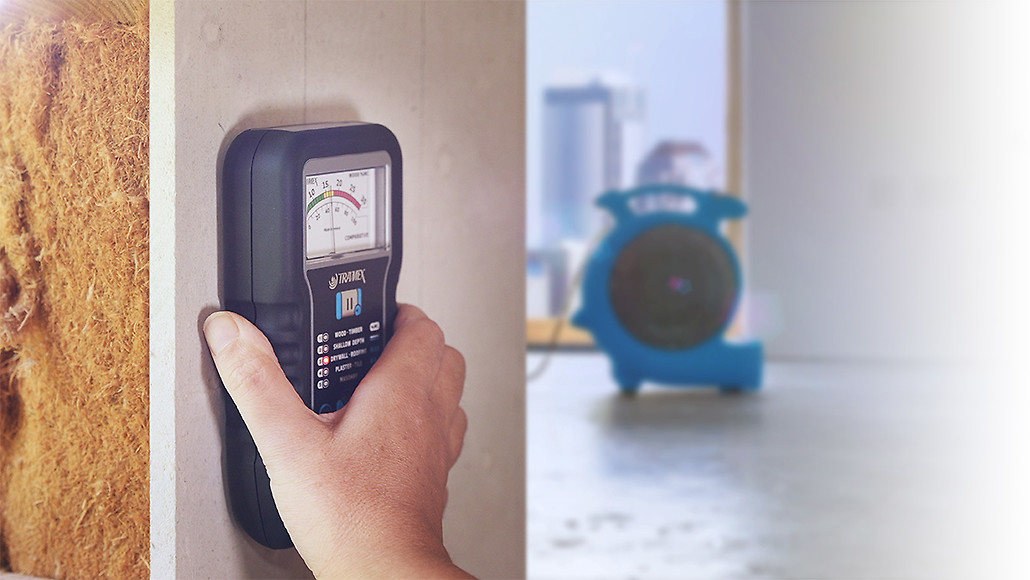
- Pinless moisture meters to scan drywall, flooring, and ceilings
- Infrared thermal imaging cameras to locate temperature anomalies caused by damp materials
Scanning helps identify moisture patterns that aren’t visible. Water often spreads far beyond the original entry point, especially behind walls and ceilings.
This step creates a working map of suspected moisture zones.
Step 4: Pin Meter Confirmation Readings
After scanning highlights suspect areas, inspectors use pin-type moisture meters for confirmation.
Pin meters measure moisture inside materials rather than just on the surface. They are commonly used on:
- Drywall at multiple heights
- Wood trim and baseboards
- Cabinet interiors
- Subfloor edges
- Framing where accessible
These readings confirm whether materials are actually wet and help determine severity.
Step 5: Moisture Mapping and Documentation
Finding moisture is only half the job. The next step is mapping it clearly.
Moisture mapping involves:
- Marking areas with elevated readings
- Identifying moisture boundaries
- Comparing readings to known dry areas
- Documenting results for drying and repair planning
This prevents incomplete drying and unnecessary demolition. It also provides valuable documentation if insurance or contractors are involved.
Step 6: Identifying the Moisture Source
Drying without fixing the source guarantees failure. Moisture detection always includes source identification.
Common sources in Deerfield Beach include:
Plumbing-Related Moisture
- Slow leaks under sinks
- Supply line failures
- Shower and tub plumbing
- Water heater connections
Roof and Rain Intrusion
- Roof penetrations
- Flashing failures
- Wind-driven rain around windows and doors
AC and Condensation Issues
- Clogged condensate drain lines
- Cracked or rusted drain pans
- Poorly insulated ductwork
- Oversized AC systems short-cycling and failing to dehumidify
Groundwater and Slab Seepage
- Moisture at slab edges
- Repeated dampness after heavy rain
- Flooring issues tied to wet seasons
Correctly identifying the source determines whether the solution is plumbing repair, roof work, HVAC correction, drainage improvements, or a combination.
Step 7: Developing a Drying Strategy
Once the source is stopped, drying begins—but not all materials dry the same way.
Drying strategies depend on:
- Material type (drywall, wood, insulation, concrete)
- Amount of moisture present
- Duration of exposure
- Accessibility
Typical approaches include:
- Directional airflow with air movers
- Dehumidification to control ambient moisture
- Removal of materials that cannot dry effectively (often insulation)
Drying continues until moisture readings return to normal—not until surfaces simply “look dry.”
Step 8: Ongoing Moisture Monitoring
Proper moisture detection doesn’t stop after equipment is placed. Monitoring ensures drying is actually working.
Monitoring includes:
- Repeat moisture meter readings in mapped areas
- Tracking humidity levels in affected rooms
- Adjusting drying equipment as needed
This step prevents premature repairs that trap moisture behind walls or under floors.
Step 9: Mold Risk Evaluation
In South Florida, mold risk increases quickly when moisture lingers. Even without visible growth, moisture detection helps assess mold potential.
Mold risk increases when:
- Materials remain wet for 24–48 hours or more
- Insulation is saturated
- Musty odors persist
- Humidity remains elevated
If risk is identified, additional inspection or testing may be recommended before repairs proceed.
Step 10: Final Verification Before Repairs
Before repairs begin, moisture detection includes final verification.
This involves:
- Confirming moisture levels are back to normal
- Ensuring humidity is stable
- Verifying the moisture source is fully resolved
Only after verification should drywall, flooring, paint, or trim be replaced. Skipping this step is one of the most common reasons water damage repairs fail.
Common Mistakes Homeowners Make
Avoiding these mistakes saves time and money:
- Painting or patching before moisture is gone
- Assuming stains equal the full damage area
- Ignoring humidity issues
- Drying without identifying the source
- Relying on surface checks alone
Moisture detection exists to prevent these exact problems.
Long-Term Prevention Tips for Deerfield Beach Homes
Once moisture detection is complete, prevention becomes the focus.
Effective prevention includes:
- Regular AC maintenance and drain line cleaning
- Monitoring indoor humidity
- Sealing and insulating ductwork
- Maintaining roofs, windows, and exterior drainage
- Periodic checks under sinks and around appliances
Early detection always costs less than late repairs.
Final Thoughts
Moisture detection in Deerfield Beach is not a single tool or quick inspection—it’s a step-by-step process. When done correctly, it finds hidden water, stops damage early, and prevents mold and repeat repairs.
By following a structured approach—inspection, scanning, confirmation, mapping, source identification, drying, and verification—homeowners gain clarity instead of guessing. In a climate where moisture never truly goes away, moisture detection isn’t optional. It’s one of the smartest protections a homeowner can use.
